
Porto Grande is the second most northwestern island in the archipelago of Cabo Verde and our last port of call in Africa–– not to be confused with Senegal as our last port of call on the Continent of Africa.

From our balcony, the landscape looks as though it was scraped bare, the parched flora camouflaged against the rocky surface. This volcanic island receives less an 3.5 inches of rain annually and with the introduction of livestock during early colonization that grazed this already fragile ecosystem, these lands are stressed.

The month of May marks the end of their cruise ship season, but the summer swells with tourists from Spain, Portugal and a smattering of other European countries. The island has been constructing a new pier, which is near completion and should be ready for the 2025 season.
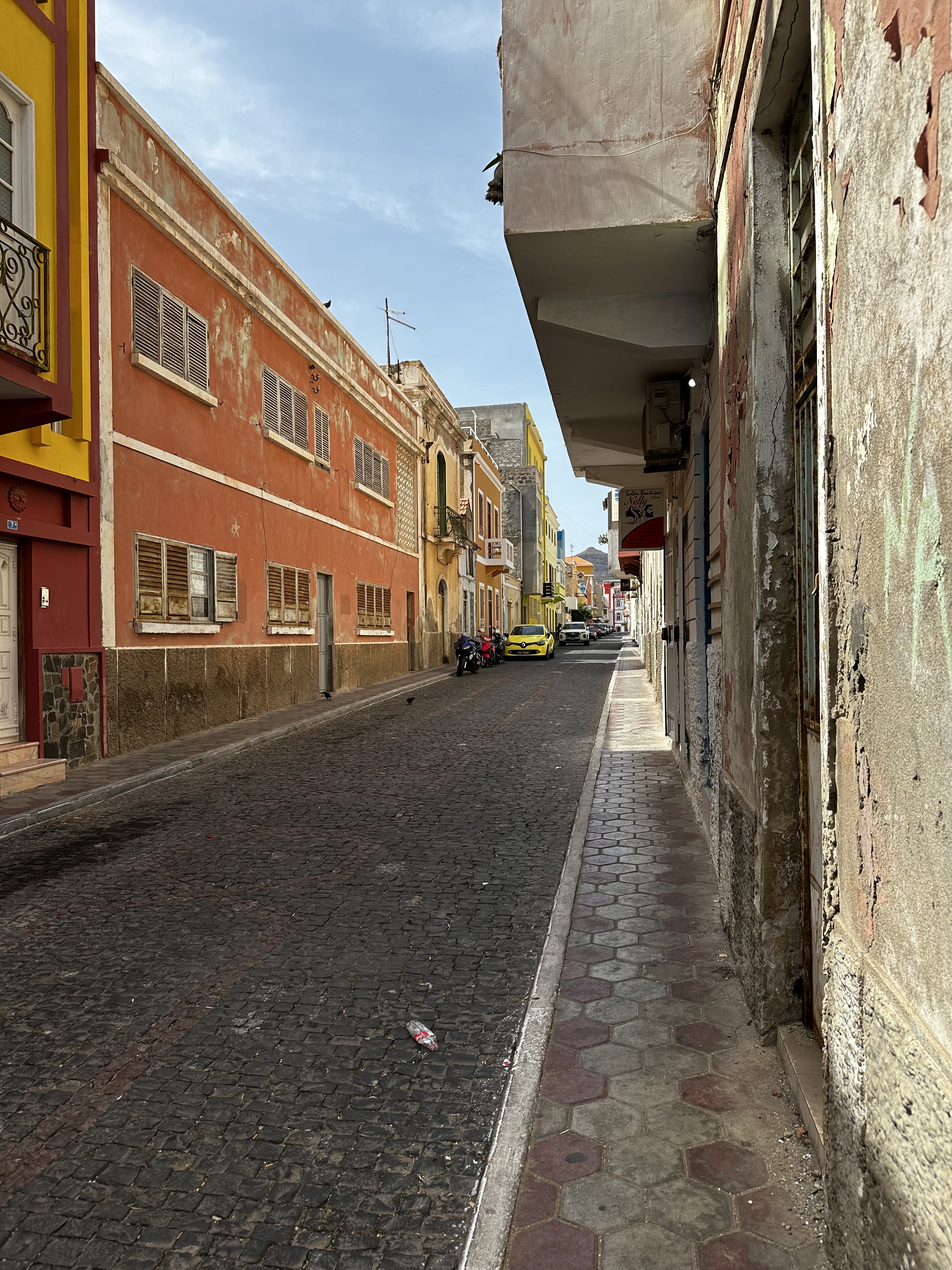
Our ship sailed into Mindelo Bay on the northwest corner of Sao Vincente Island. The main city is Mindelo where the architecture and influence is more European than African. The buildings and colors are very much what you would expect to see in Old San Juan, Puerto Rico.

The main languages spoken are Portuguese and Creole and you will find enough people speaking English to guide you along the way.
We had a short tour today to see the highlights, of which there are only a handful. The main attraction is the city center, the mountain peak and beaches. All easily accessible, all worth seeing. The people are friendly and you feel very safe here. We wished that our stay had an overnight because the nightlife has all the markings of continuous music as you walk the cobblestone streets in the cool dry air.
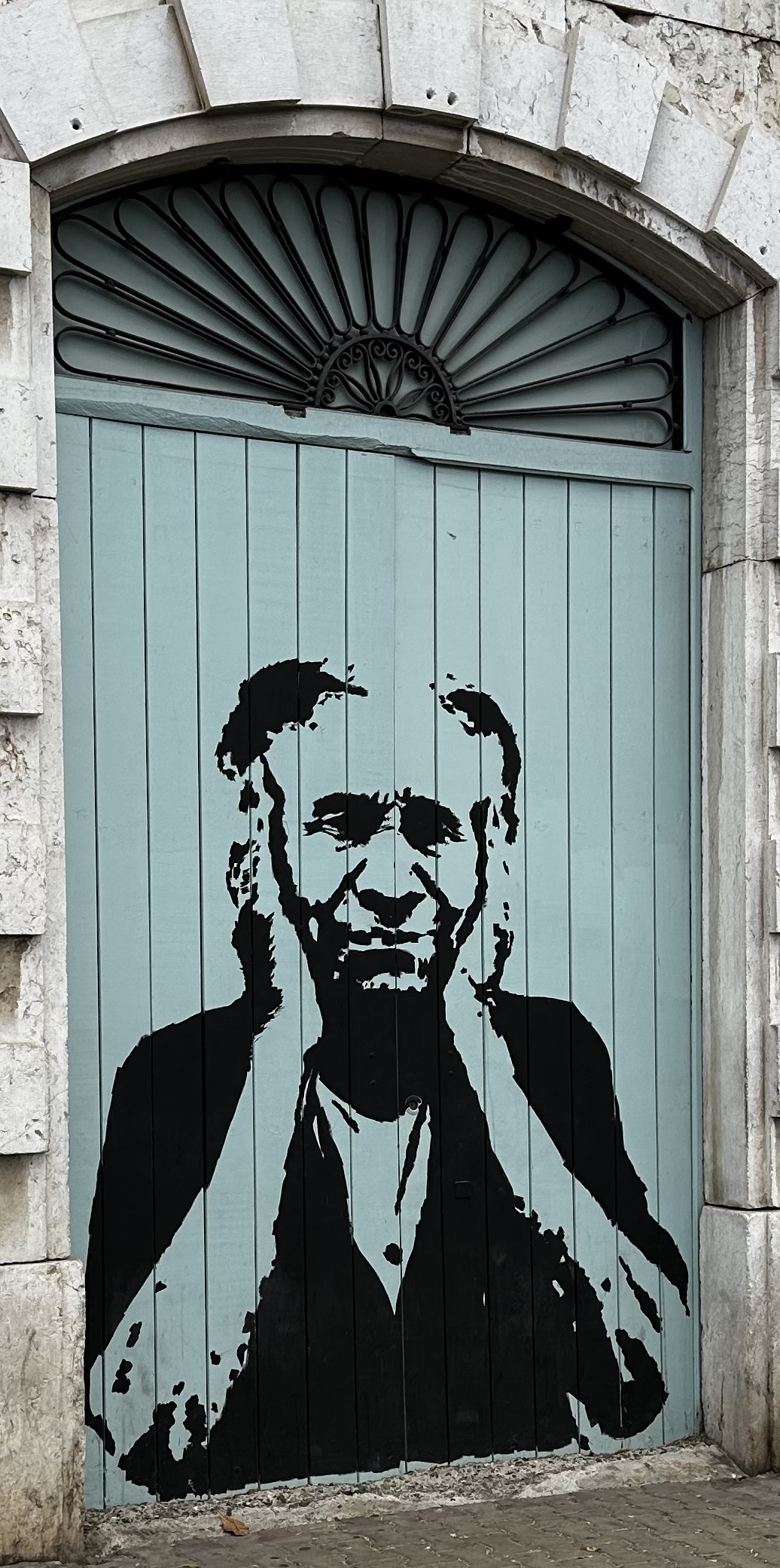
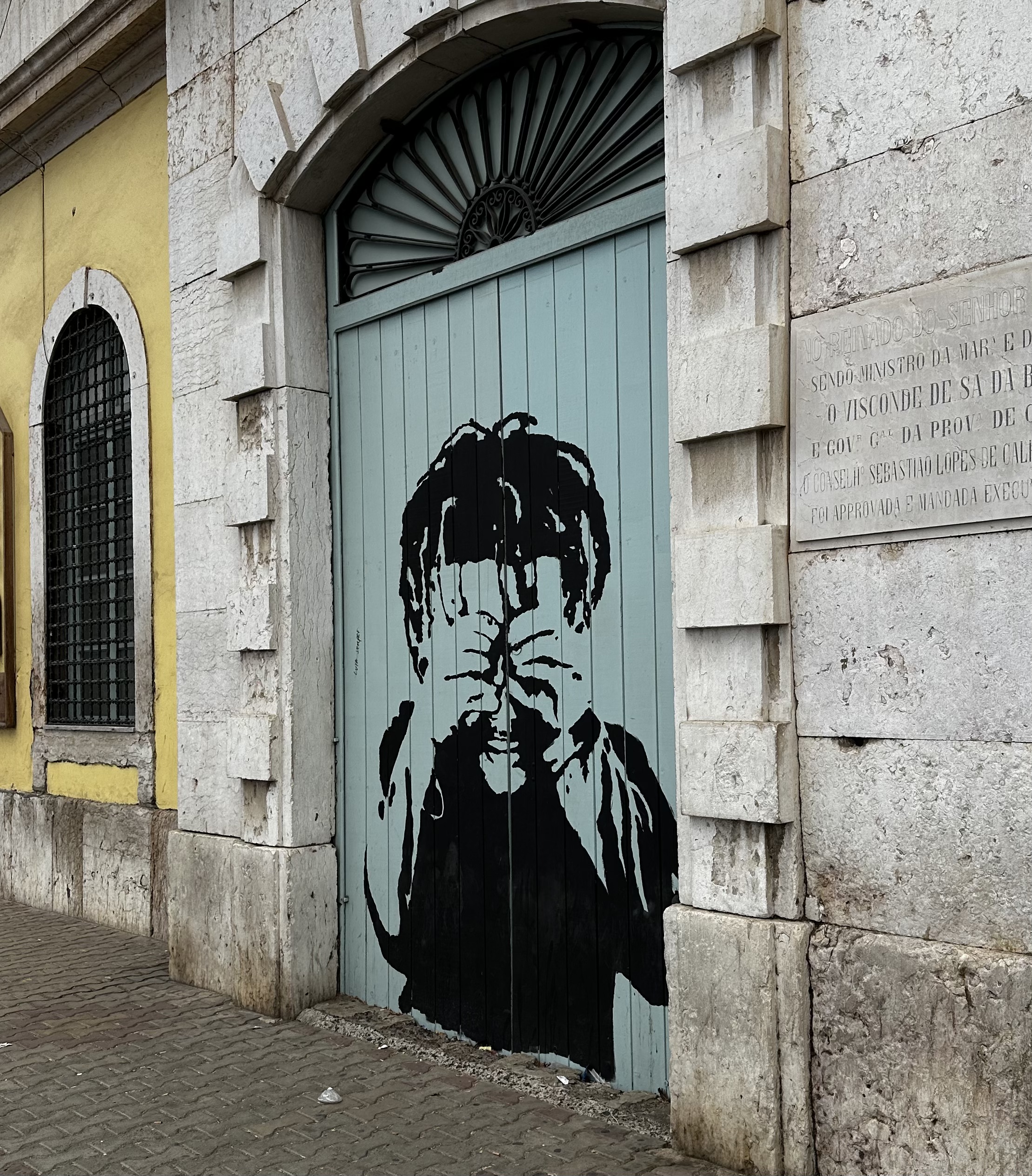
Our first stop was the cultural Center along the waterfront. It is also where the ship’s shuttle service (for those not on scheduled tours) will drop you off, with services every half hour until 1/2 prior to departure. The Cultural Center was nothing more than a gift shop (too funny), but it did give me an opportunity to grab some images of exterior artwork.



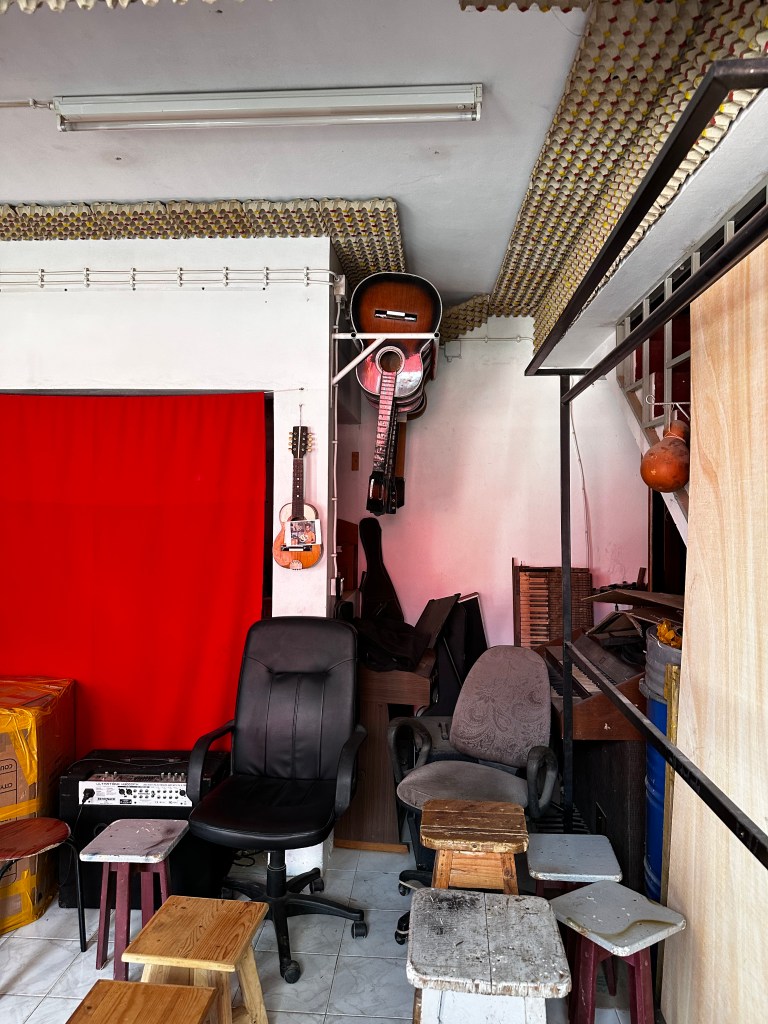
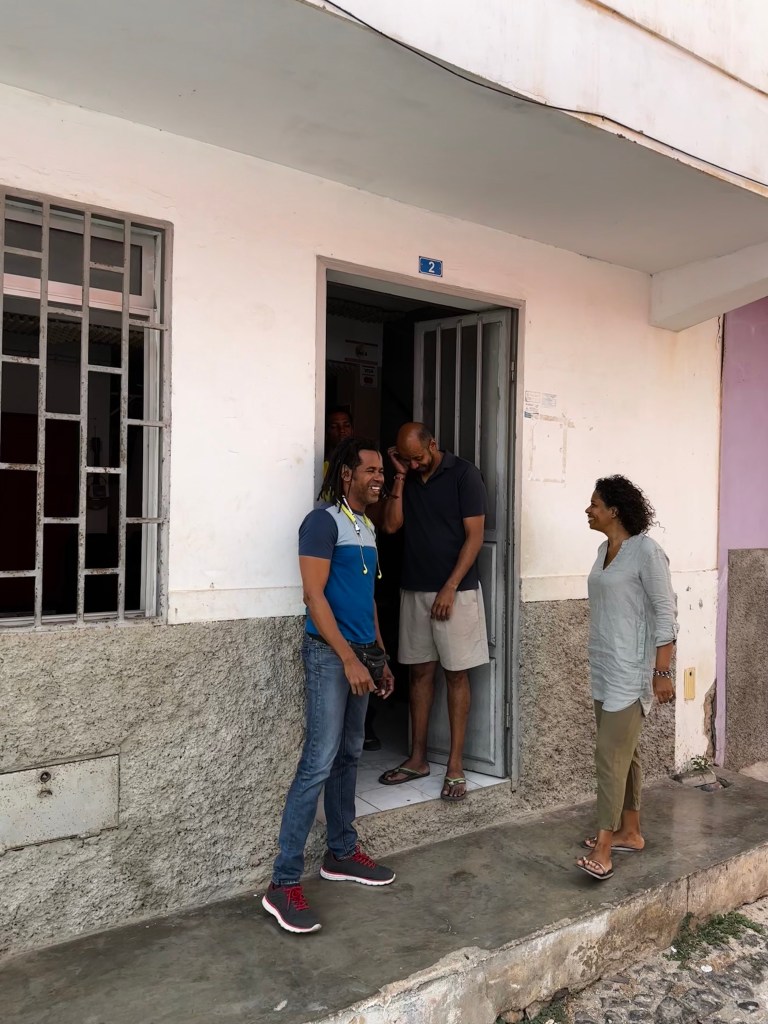
Next on the list was to a guitar factory, our small bus making a series of tight turns into a residential street where it came to a halt, which at first I thought the bus had stalled out. A factory was nowhere in site. We filed off and through a door into a small 12′ x 12′ room.
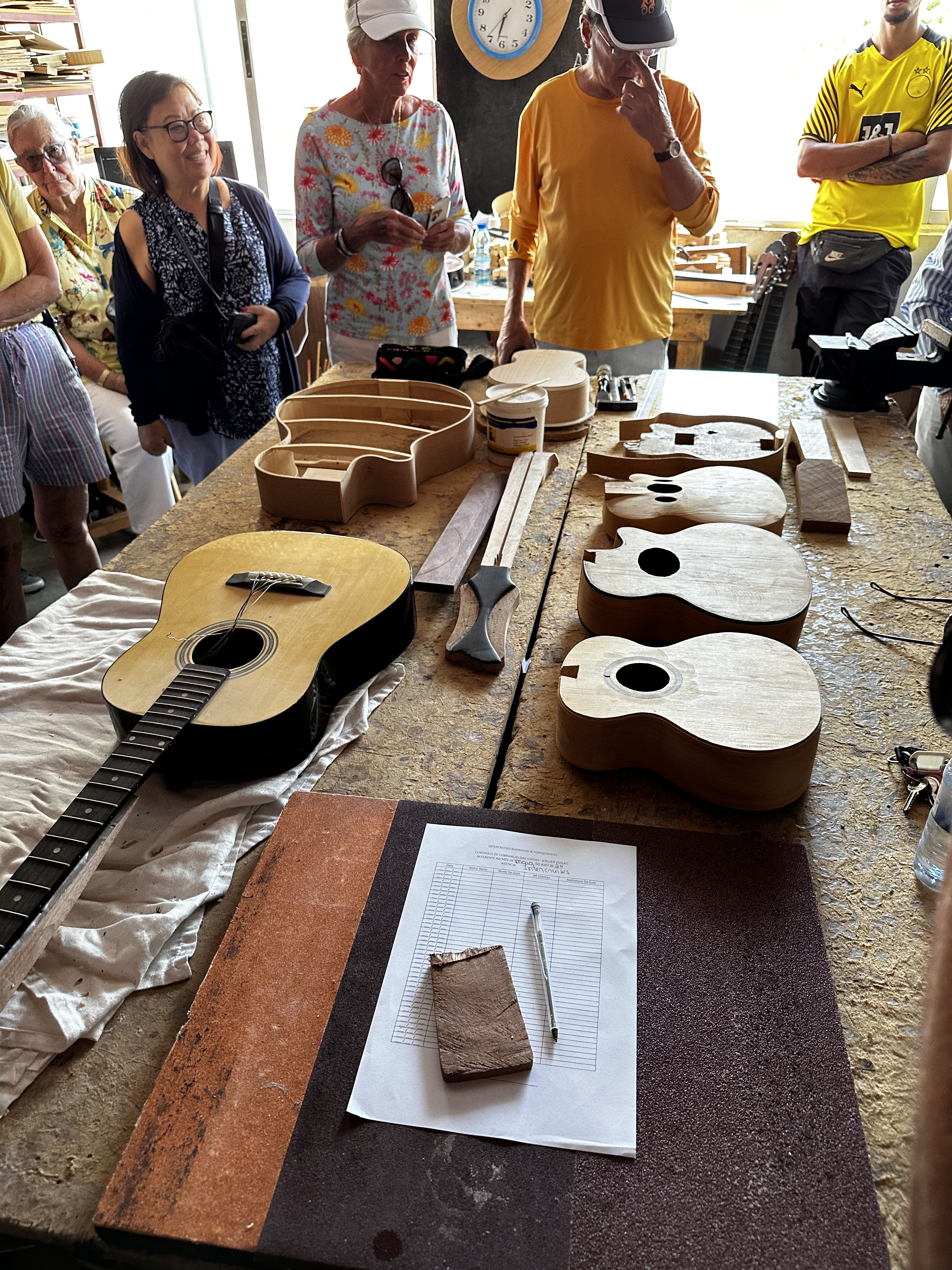
Heading up a staircase, our shoulders touching the walls, we gathered around a workbench where a young artisan named Luis Baptista told us about how his father had started the business and what types of instruments this shop made. You could see the pride he had in carrying on this rich tradition.
At first, I don’t think anyone was too impressed. The room upstairs was stuffy and we were crowded around the workbench, the instruments and molds were covered in sawdust and Luis was not very confident with his English, his voice just above a whisper. At one point someone in the group asked if he could play. He chuckled and replied, “no, I only play a little.” What little confidence we had was waning. As he continued his talk about the various stages of construction and pointed out the craftsmanship of instruments he had laid out, our confidence began to gather as he tapped on the deck of a guitar that was finished, a guitar custom made to be shipped off to Paris. This instrument had such a nice, lasting resonance to the cavity that we knew these were finely made.
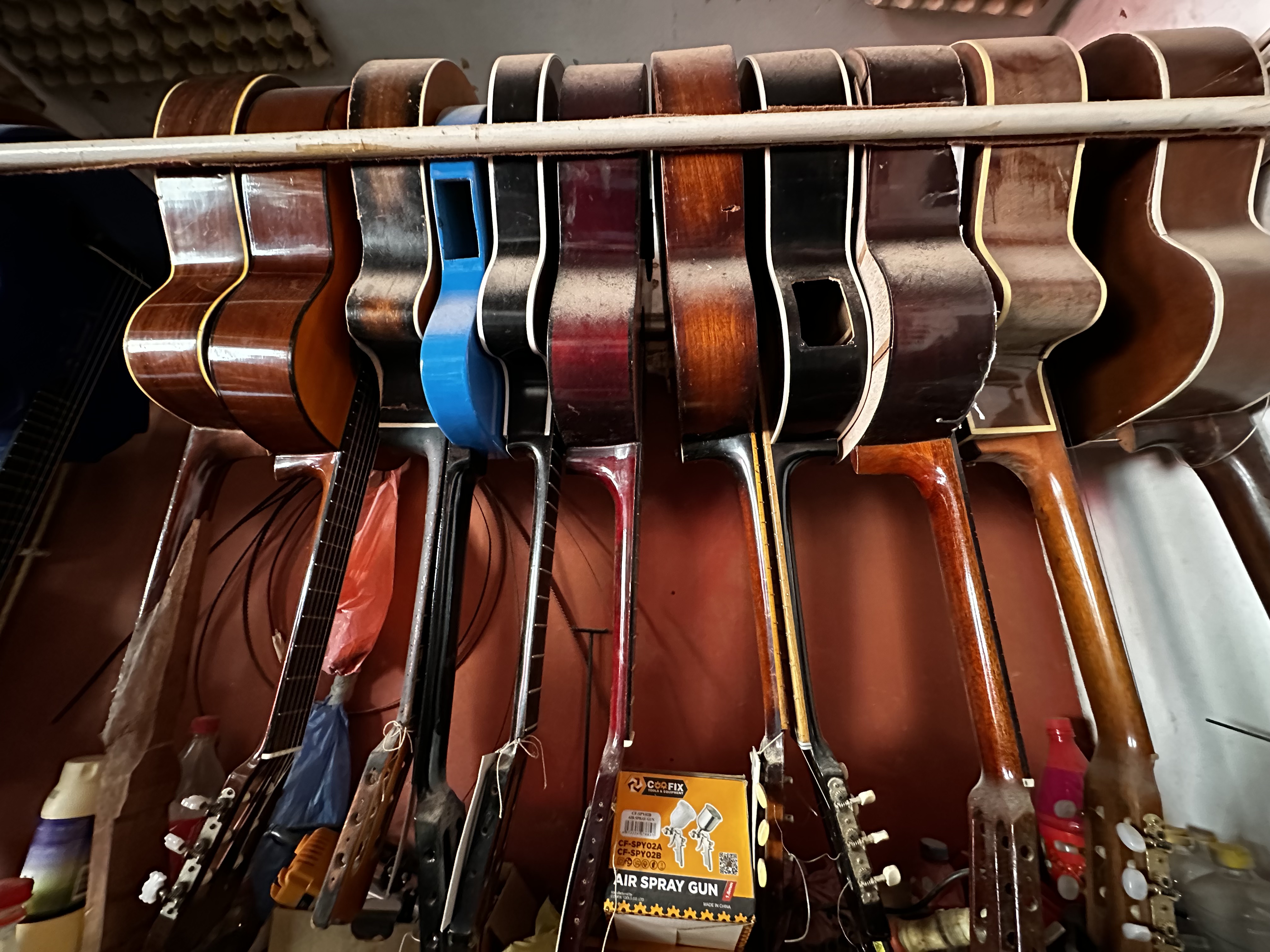
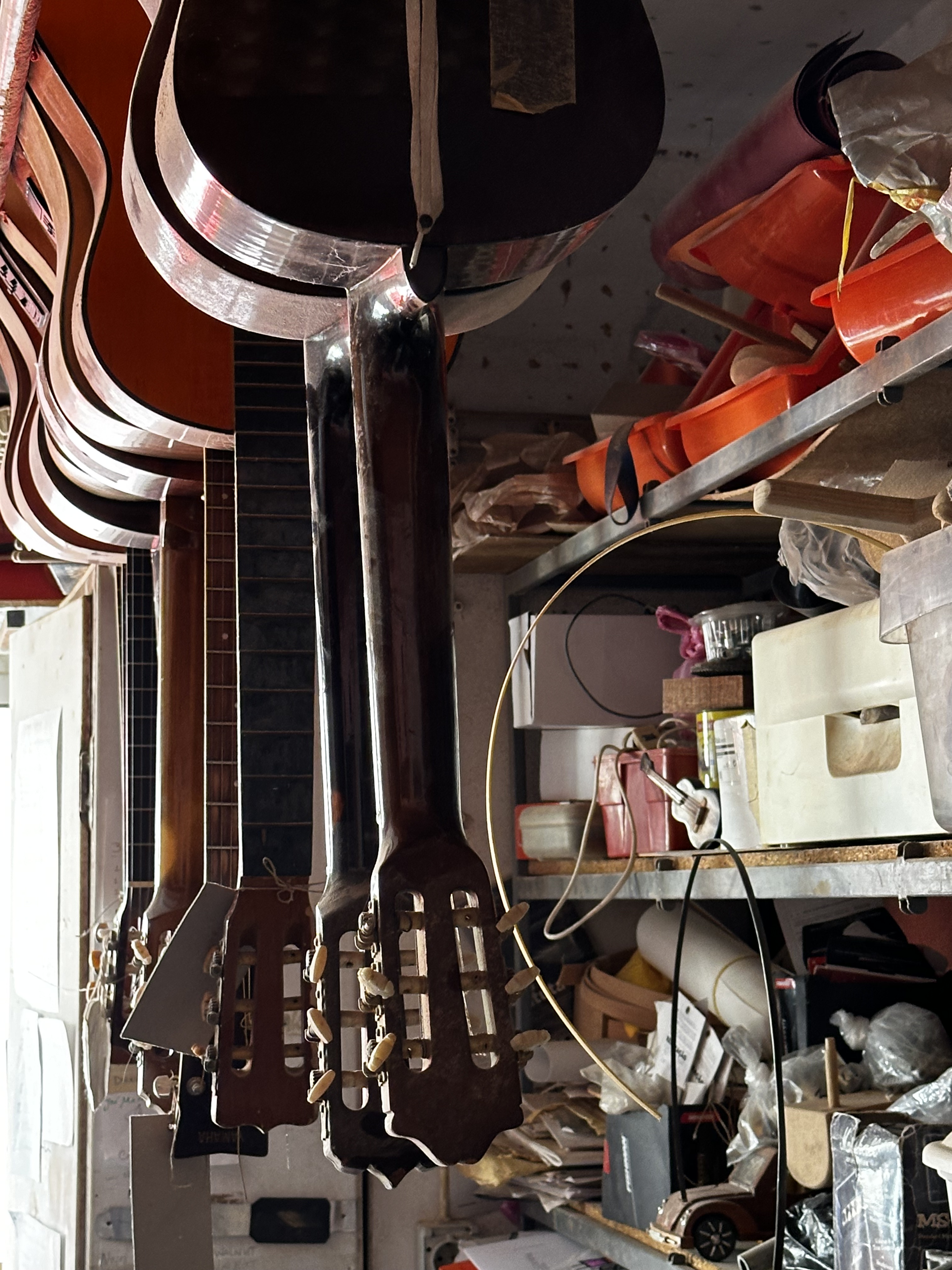

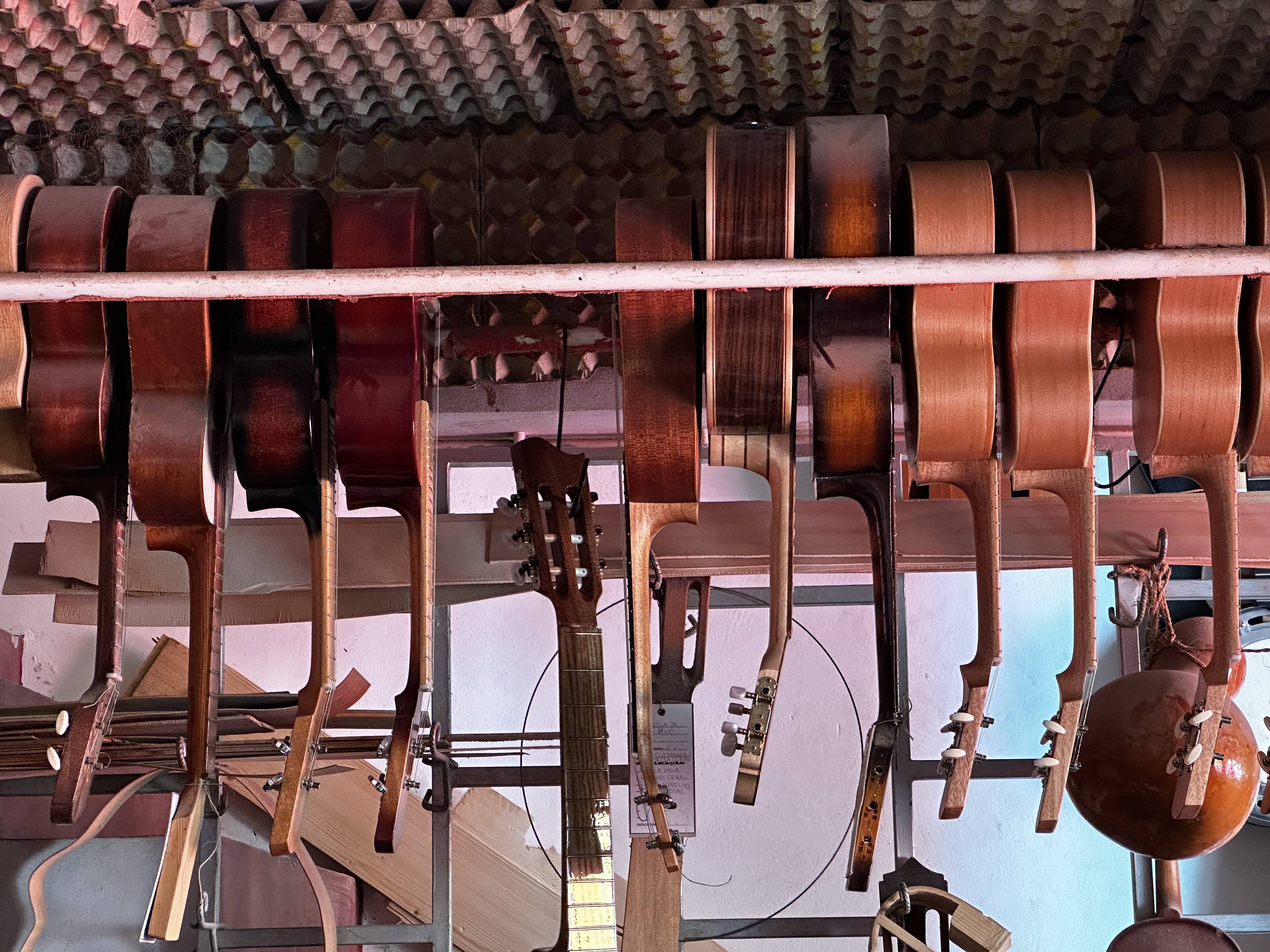
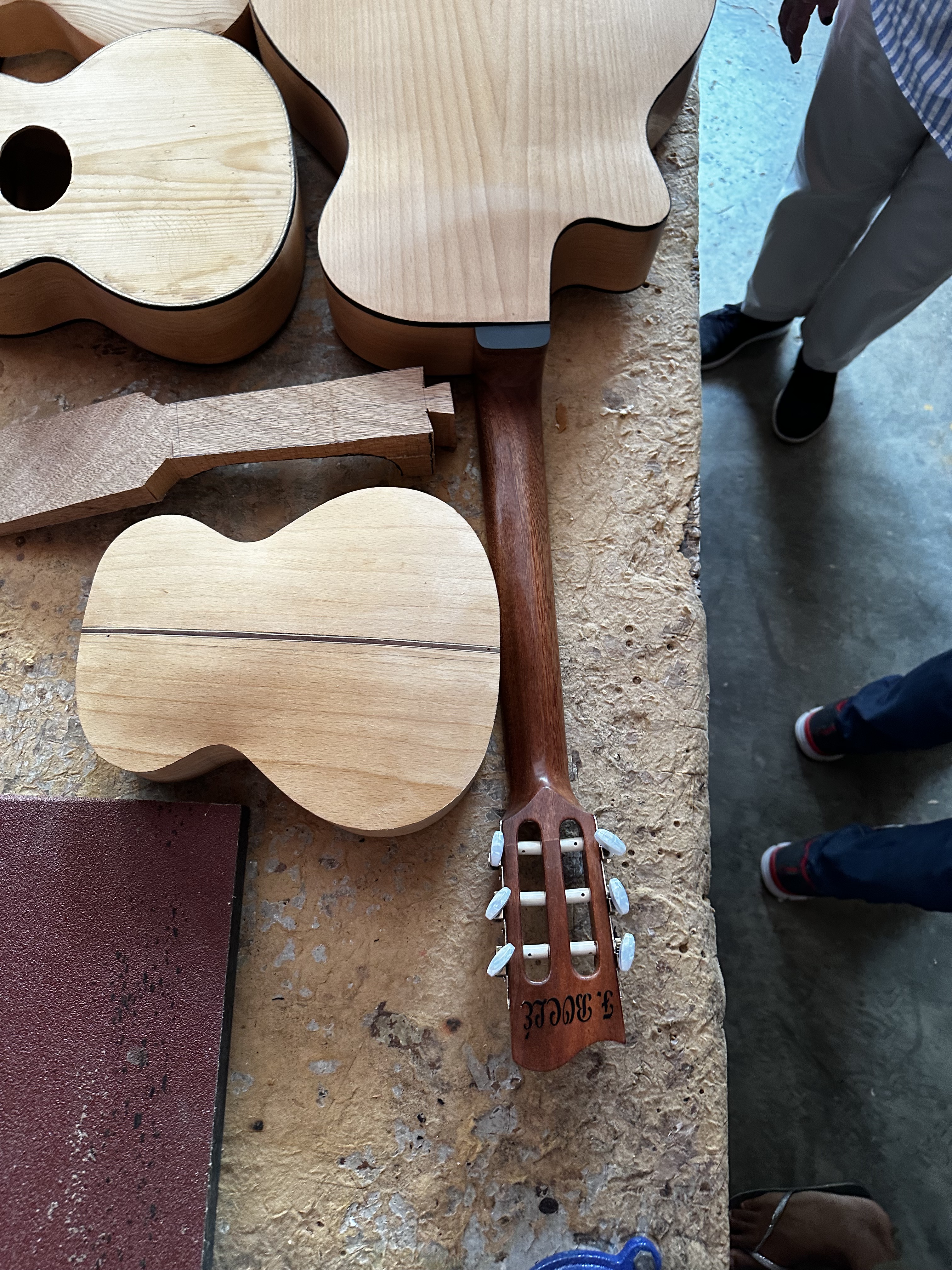

But as Luis spoke and a few passengers who knew Portuguese translated some words and phrases, our impression and his confidence changed when we headed back downstairs for a performance.
Their instruments sounded beautiful as did their performance, so If you are looking for a hand made instrument, they customize and ship anywhere in the world.
See their contact info at the end of the video.
We stayed for a couple of songs and wished we could have listened to them well into the night, sipping on rum, our bodies swaying to the rhythm and our minds drifting out the windows without a worry. With a fond farewell , we were back on the bus and on our way. This was a gem of a stop and if you find yourself visiting Porto Grande in need of an instrument.. or not… look them up.
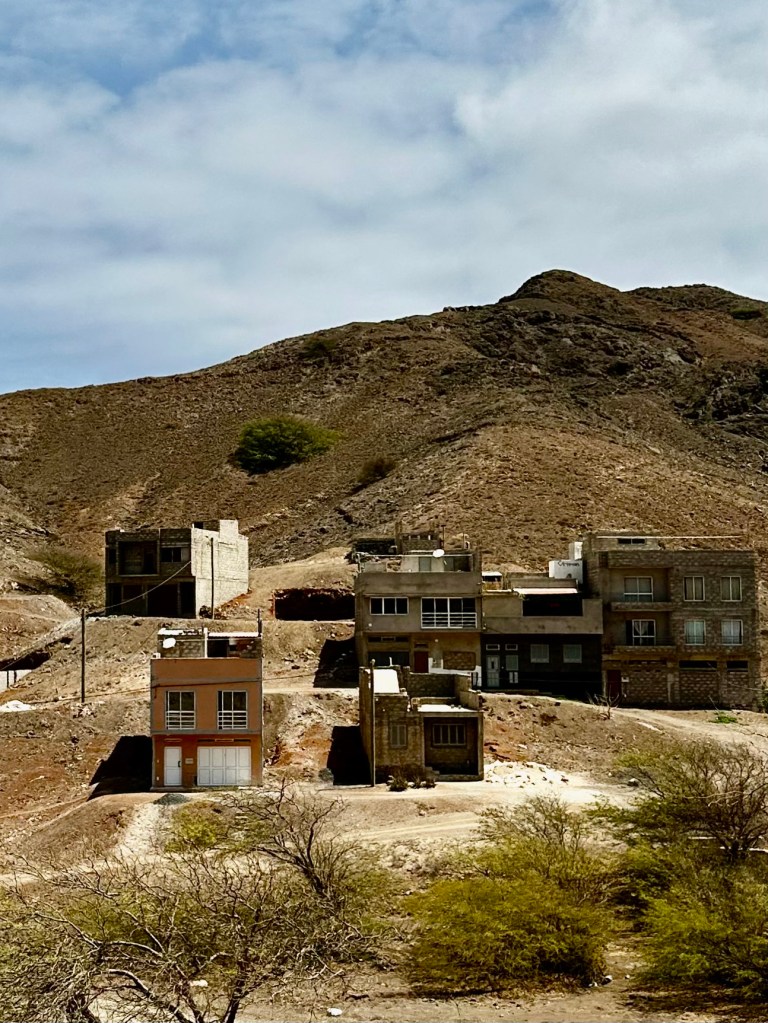
Next we headed up the mountain, our bus straining in low gear as the smell of heated transmission fumes eddied back through the open windows. The landscape is lunar as if this was the place on Earth where all stones are made. I have never seen so many softball sized to cinderblock sized stones in my life–walls and walls of them starting and stoping just to fill a gully.

Most places you may see stones stacked upon each other, but here there are small walls as if it were an olympic sport. It must be quite beautiful and zen-like to come up here and just stack stones along a ridge, a mark that you were here.
Why anyone would build up this high in the mountains is a guess, but the views are beautiful, not only of this entire island but of its bigger sister, Santo Antão, looming in the distance. It’s just a long way down from the top into town if you forgot the milk.
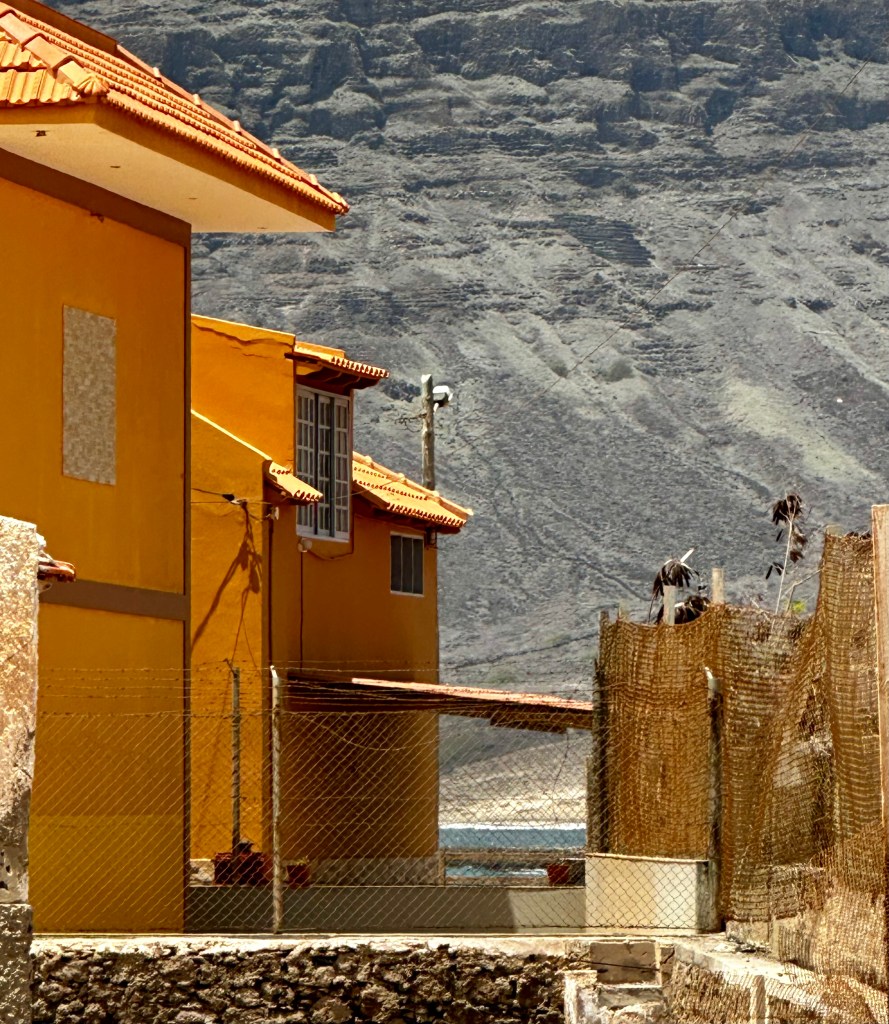
Our next point of interest was on the north eastern side of the island in a beach resort community called, Baía das Gatas.

We stopped here for a little music, some deep fried banana dumplings that were addicting and an assortment of other deep fried delicacies and libations, of which I had the coconut rum punch with an extra splash of locally made white rum (paint remover).
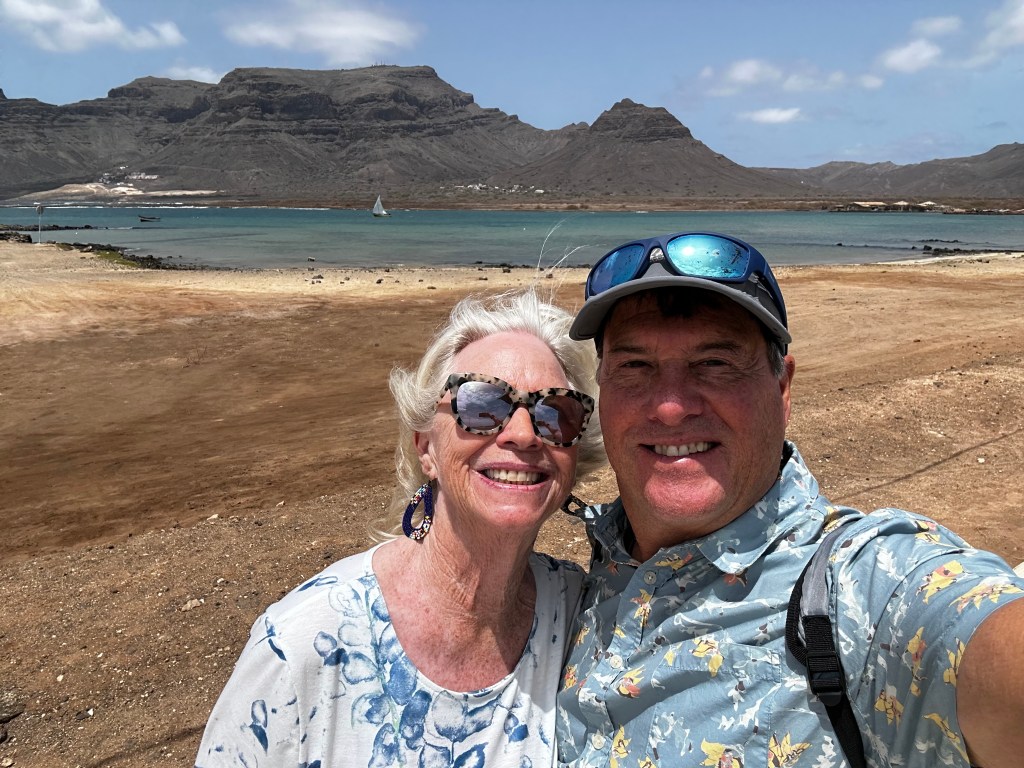
Calling Baía das Gatas a Resort community is a bit of a stretch, but one day it just might be.

These islands are fairly new to mass tourism and it does appear there is a significant amount of new construction going up.
With only a couple of restaurant/bar establishments in sight that are open air, and a musical stage set out on the water, the venues are a bit limited at the moment.
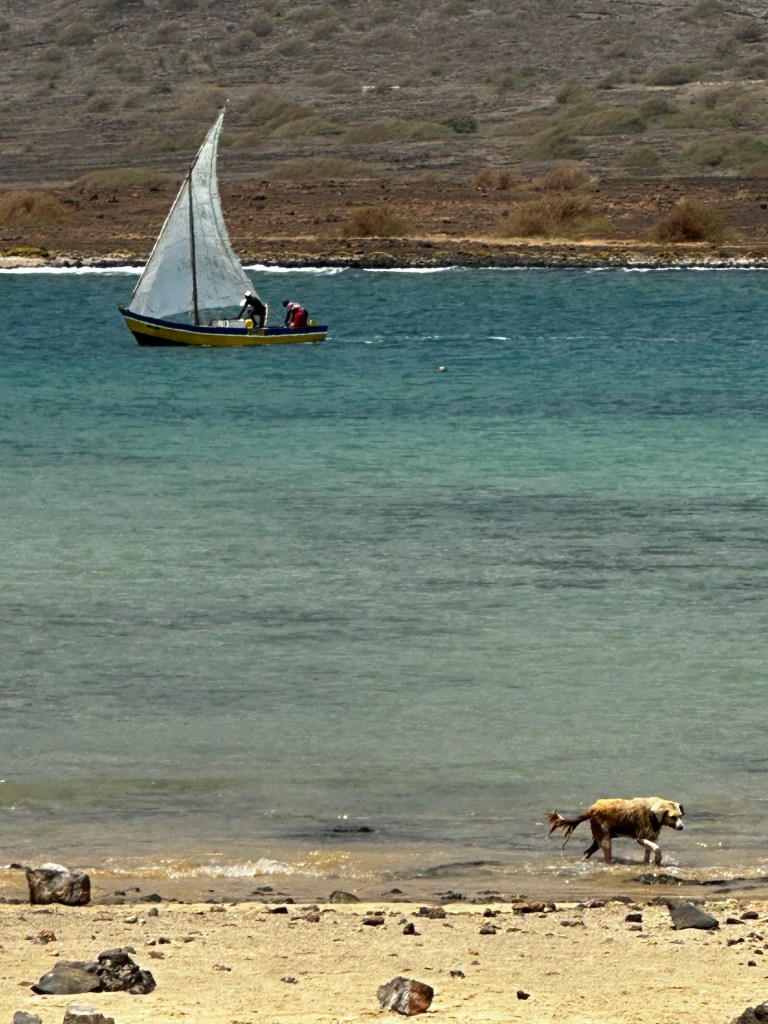
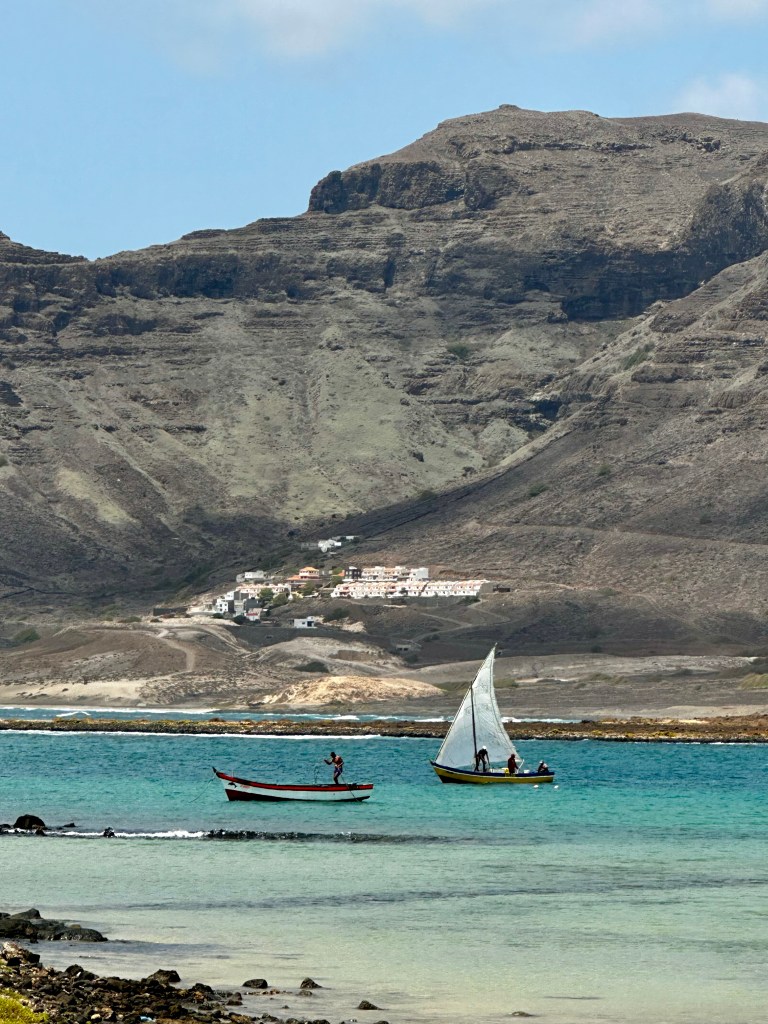
We have noticed a lot of free roaming dogs on the island and many are here. They are quite domesticated, well behaved and do they seem interested in tourists.
I even saw a couple of them go in for a dip and then lie out on the walkways in the sun to dry off–– no different from the German guy in a speedo next to them. Unfortunately, I do not have a picture of the German guy in the speedo… it was just after lunch and I only had one coconut milk punch spiked with rum.

This time of year, you will have Baía das Gatas pretty much to yourself.
There is a fascinating geological landmark here. yellow sands along the Atlantic as well as a pair of significant sand dunes across from where we stopped. This sand was blown over from the Sahara dessert. Seems impossible until you see the NASA images of these massive sand storms fanning off the coast for a thousand km.
There is a beautiful promenade, crisscrossed with inlays of stone that dress up the waterfront. If they can ever get some drought tolerant plantings and palm trees to grow here and provide some sort of irrigation, this area has the potential to become a true destination. But it will take some time and lots of money from foreign vacation home investing.

From here we headed back to port, dropped off some things at our room and headed back out using the ship’s shuttle service to bring us into town.
We walked the bay front and the town center streets, ducking into a few shops and waiting for others to re-open at 3:00 pm (siesta).
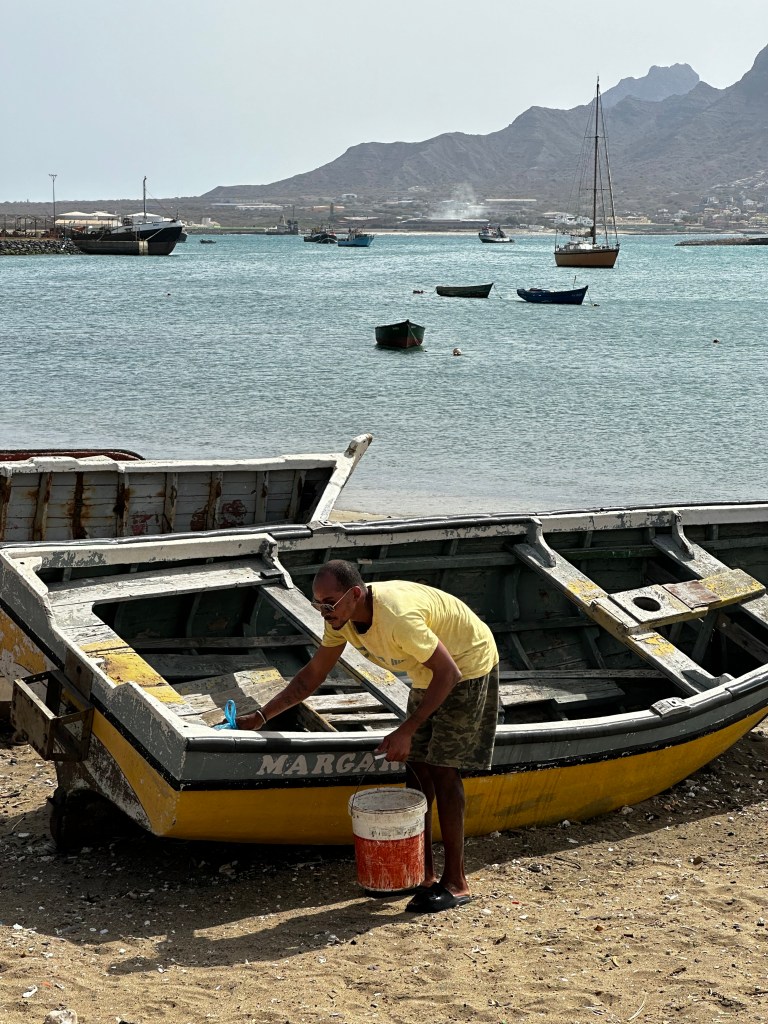
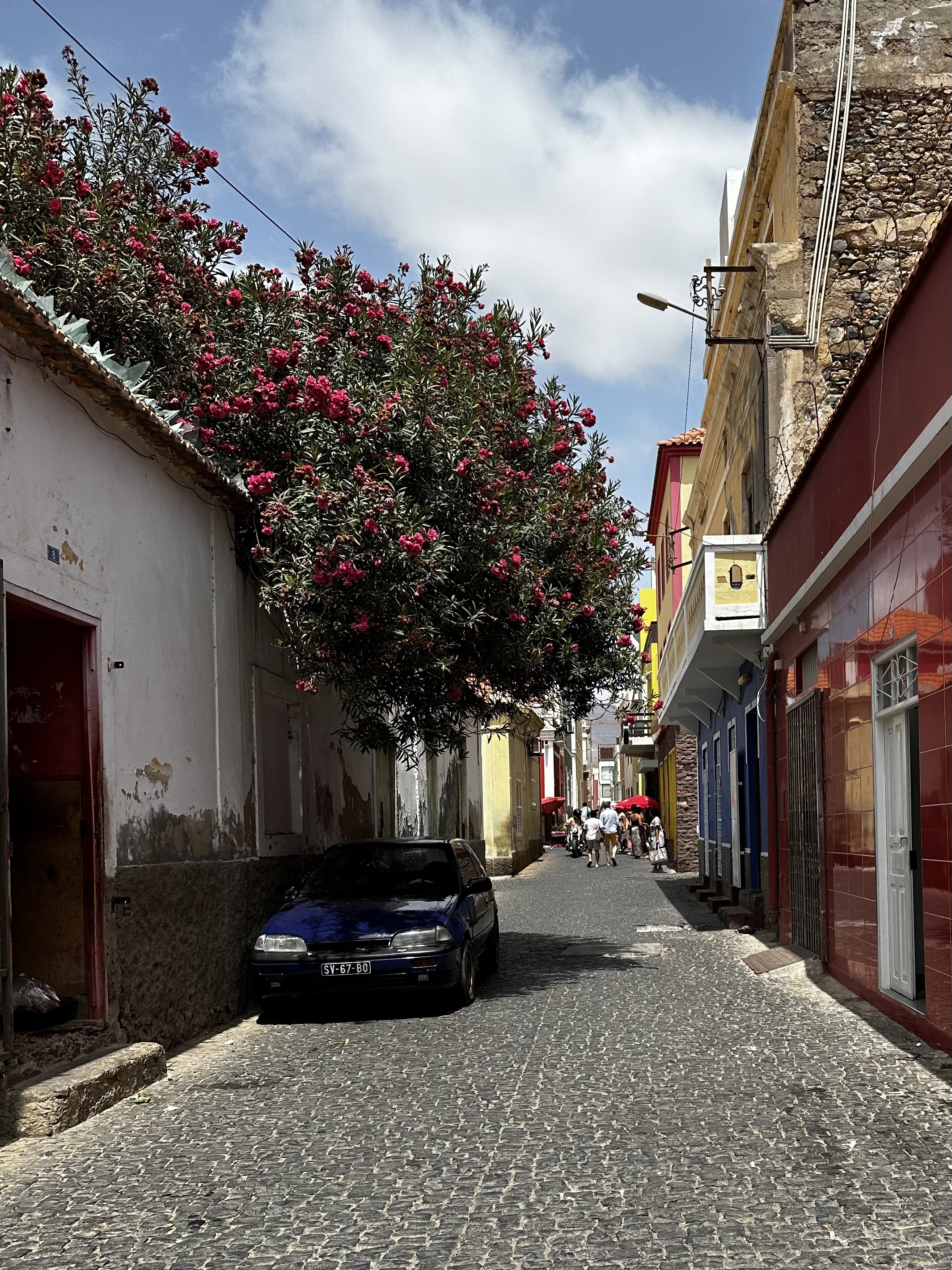
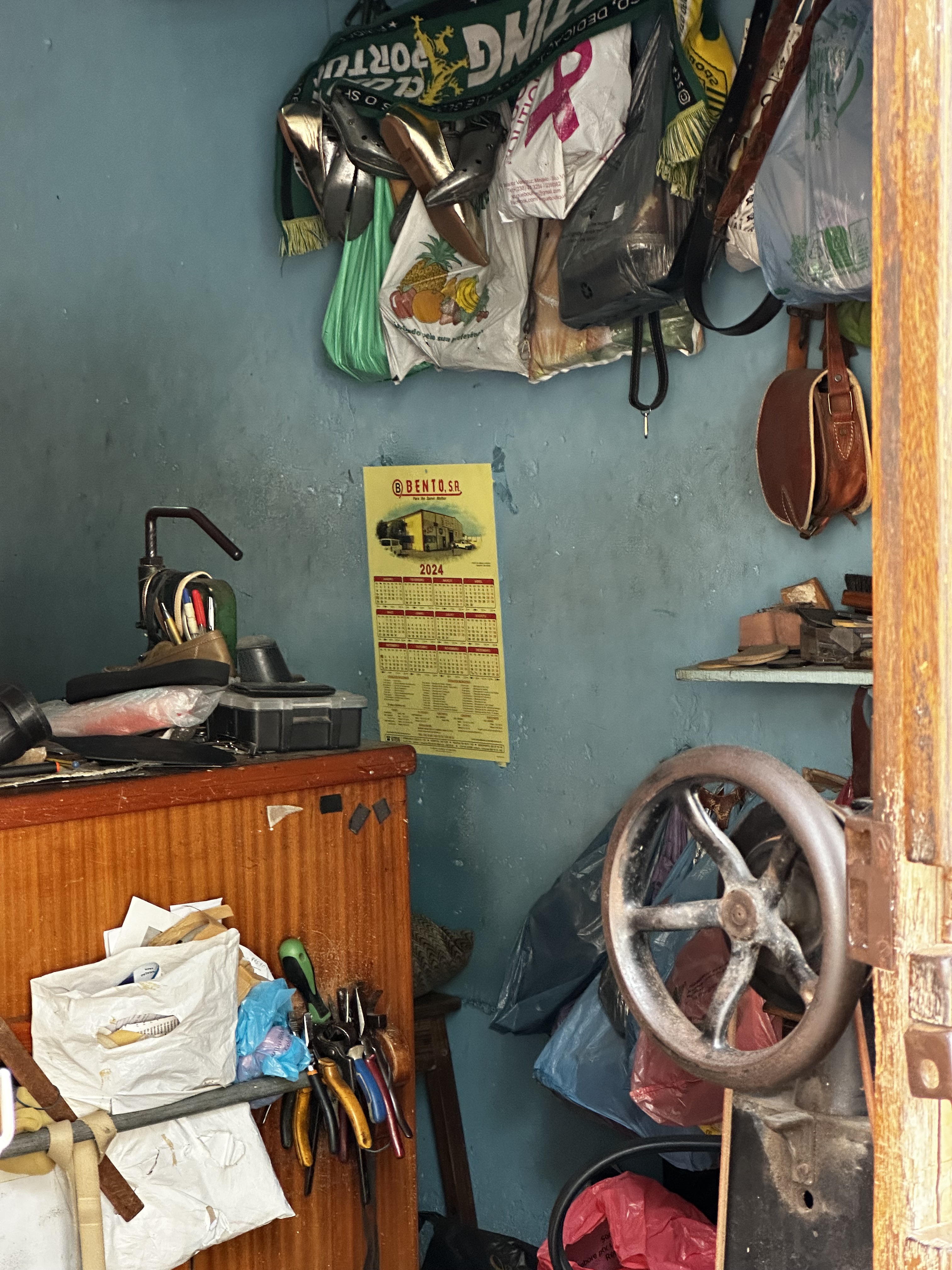
The streets are charming, the homes painted brightly, and I admired the crumbling walls, the chipped and worn doors, trying to capture the textures. colors and patina.
As I said in previous posts–people pay designers major bucks to get homes in Palm Beach to look like these. I for one, love texturing walls with plaster to get a room to look like this. Inspiring.




It was time to set sail and officially say goodby to our last African country. Next port of call, The Canary Islands of Spain.
Until then, this dress should carry you through.

 2024 World Cruise
Love the music and photos of this stop! This used to be a short few hours stopover when the defunct South African Airways flew from JFK to Johannesburg – flew that route.
LikeLiked by 1 person