
Approaching Walvis Bay, Namibia, in the fog, you can’t imagine a more desolate place on Earth. The air is laced with the smell of hydrogen sulfide and methane. Something I am familiar with, having grown up at the Jersey Shore, spending countless hours marching through the Spartina, my feet sinking into the ooze as I made my way to the mudflats exposed at low tide. Many find this smell repulsive, but for me it was just a reminder of my youth, recalling fond memories triggered by this organic rich biogenetic mud.
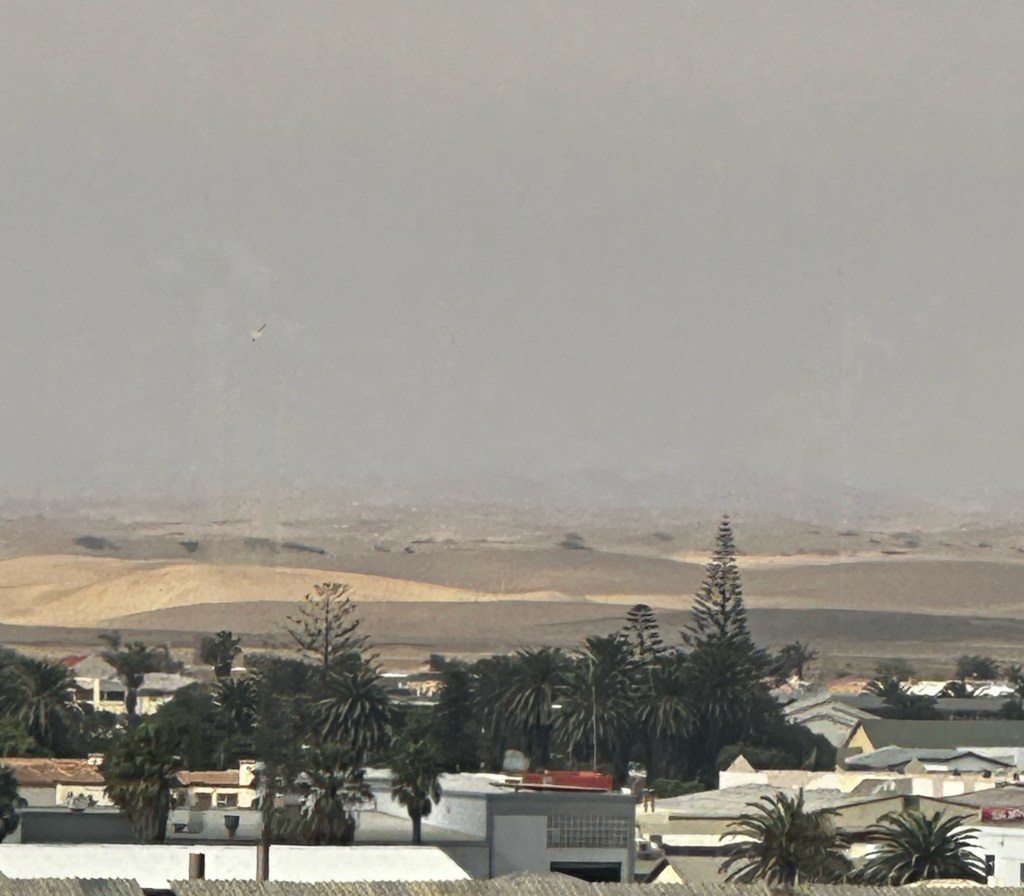
Beyond this busy cargo port lies sand. Lots of sand, windblown into massive dune systems that tumble westward, halted only by the Atlantic Ocean. The Namib desert was created around 2 million years ago when the icing up of the Antarctic dropped the sea levels significantly, the waters draining off this land, eroding into sand. Climate Change is nothing new to this planet–just to us, in this fleeting nano second we think we know everything that ever was.
Walvis Bay means Whale Bay. The Etomology of the name has morphed over time from early German settlers into its current spelling. Our ship was cleared by noon and we made our way to the shuttle which dropped us off–– you guessed it–– at the Mall. I managed to pick up two pair of shorts (since we were going into warmer climates) and Meredith found some staples as well. Then back to the ship before our scheduled Sundowner excursion.

We left the ship a second time at 4:45 PM for a Sun-Downer, where we were going to be transported out into the Namid Desert to watch the sun set over the dunes. When we saw the vehicle we were boarding, we gave each other a high-5. It looked right out of a Sci-Fi movie. Very Cool.
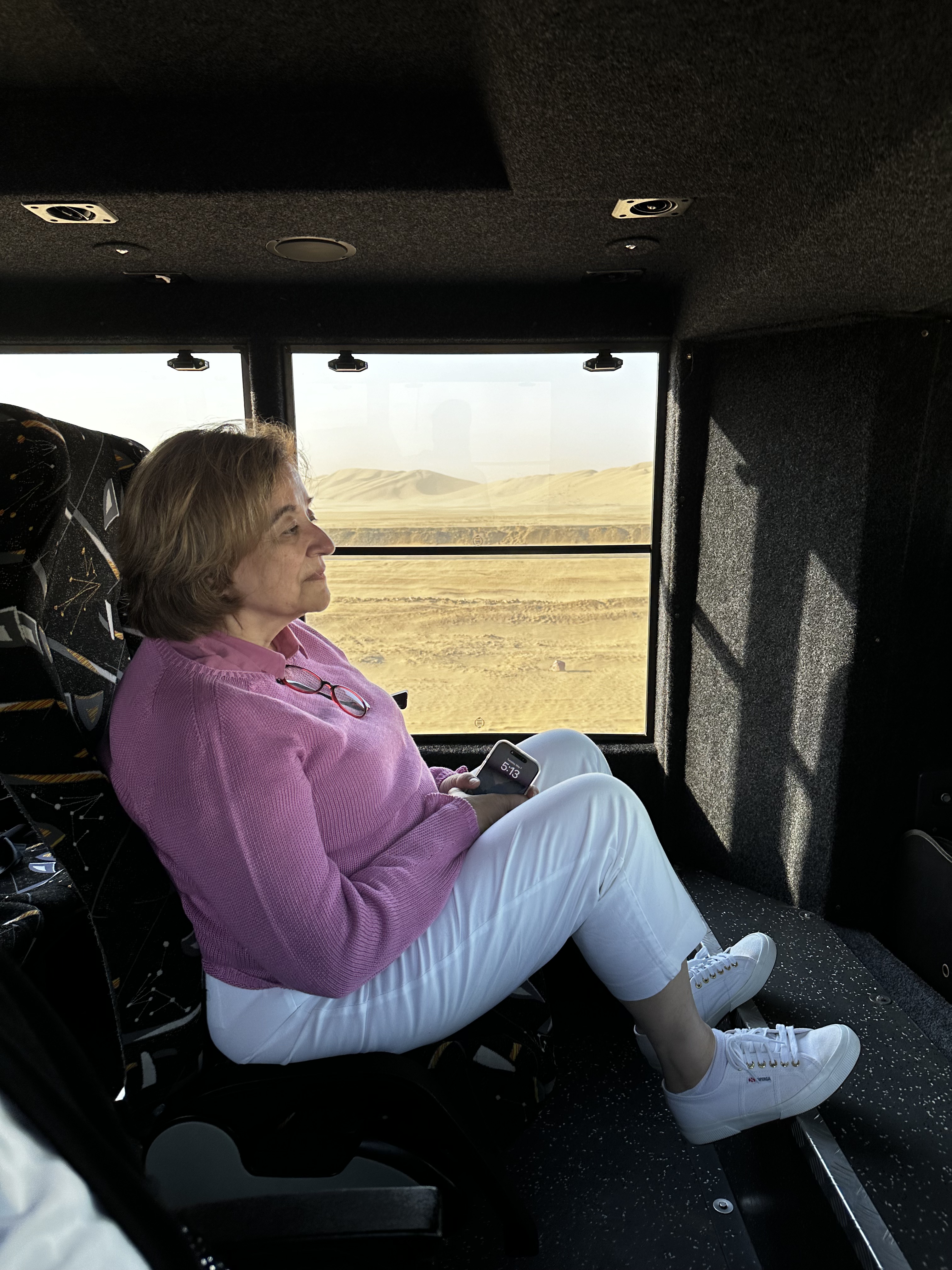


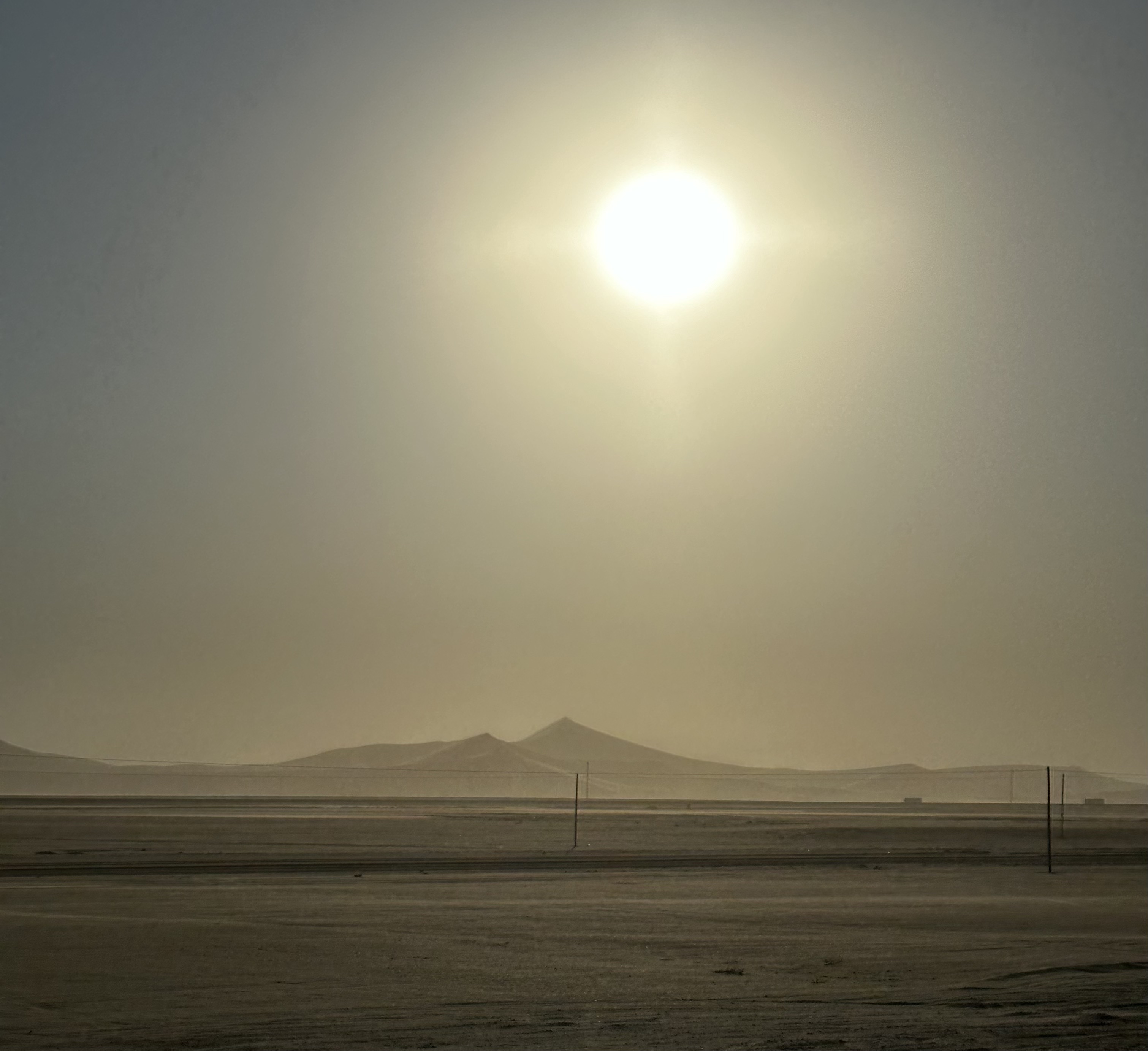
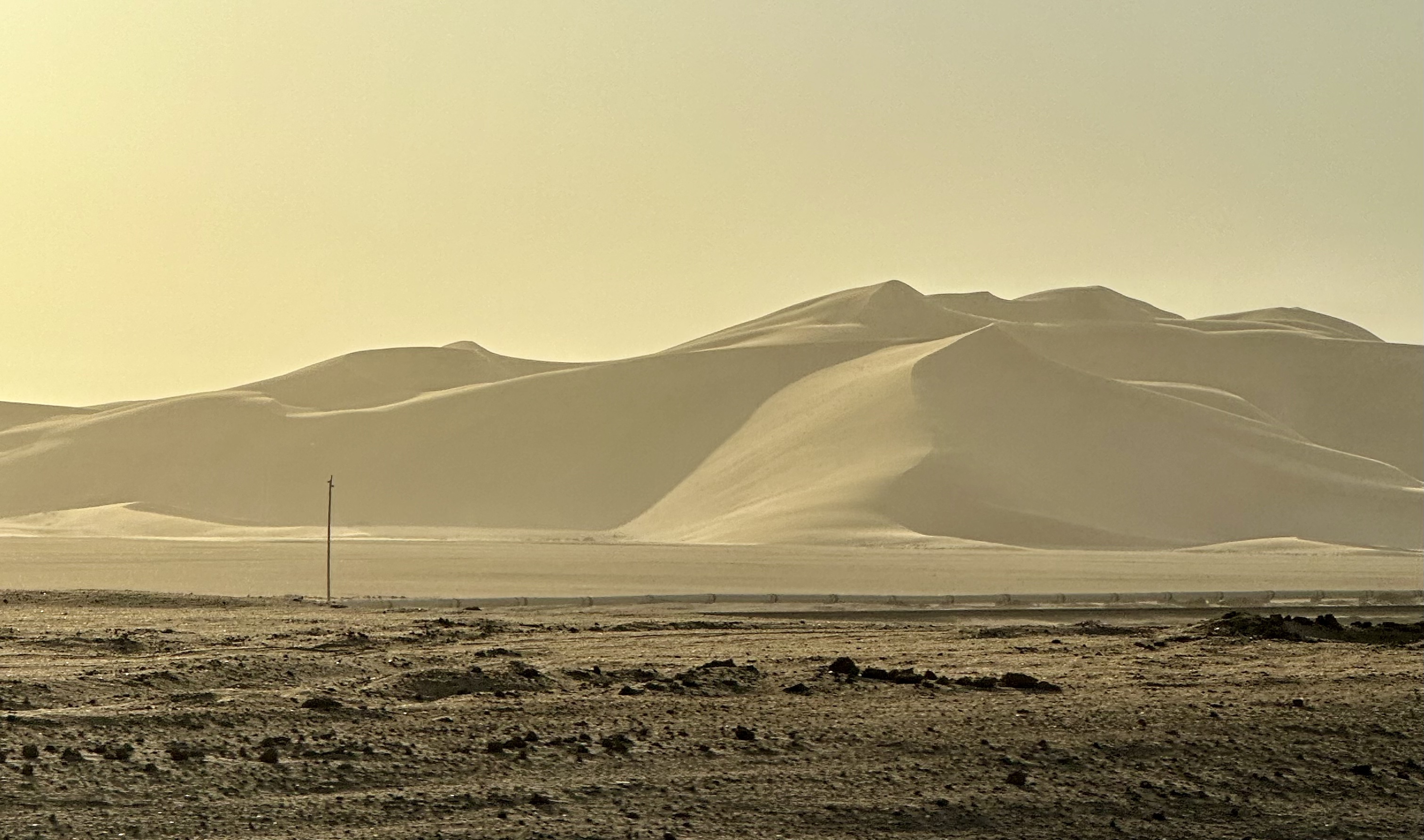

Late in the day, the winds picked up, blowing at least 35 knots (around 40+ mph). Our guide said it only blows like this a couple of days a month. But with this wind, it was carrying sand.
Fortunately, these rivers of wind are isolated and the farther we traveled the winds were hardly noticeable. We stopped at a spot called the Moonscape.
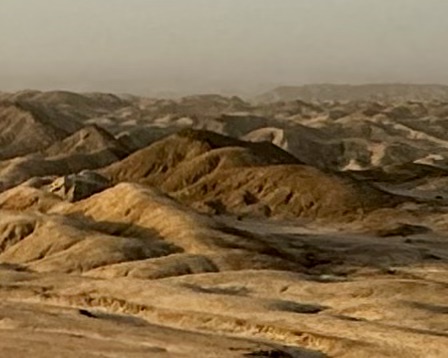
and donned our space helmets and ventured outside, but with oxygen running low and our guide ushering us along to meet the sundown, we snapped a few images and our crew bounded back to our rover, shaking the sand from our shoes as the pneumatic doors sealed us inside and we headed through the moonscape to our scheduled coordinates.

Our Sundowner location was located in a cul de sac, surrounded by jagged hills where a Namibian Marimba band was playing and a table set up with light hors d’oeuvres and champagne added a nice touch. But this was not like the Caribbean version of marimba, The Namibian marimba sounds reflective of the landscape–drifting along and pooling at our feet like cooling air–– ethereal.

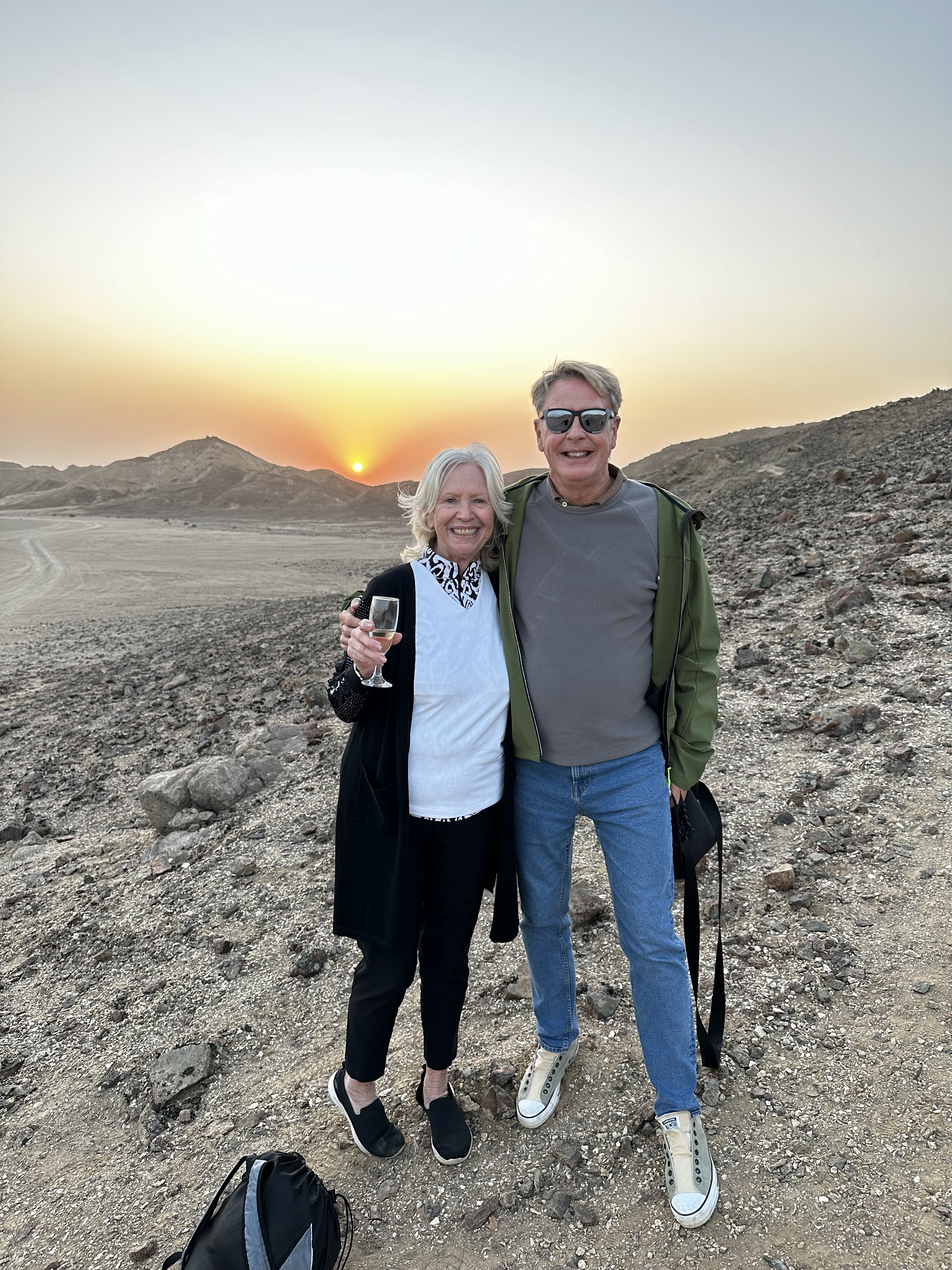

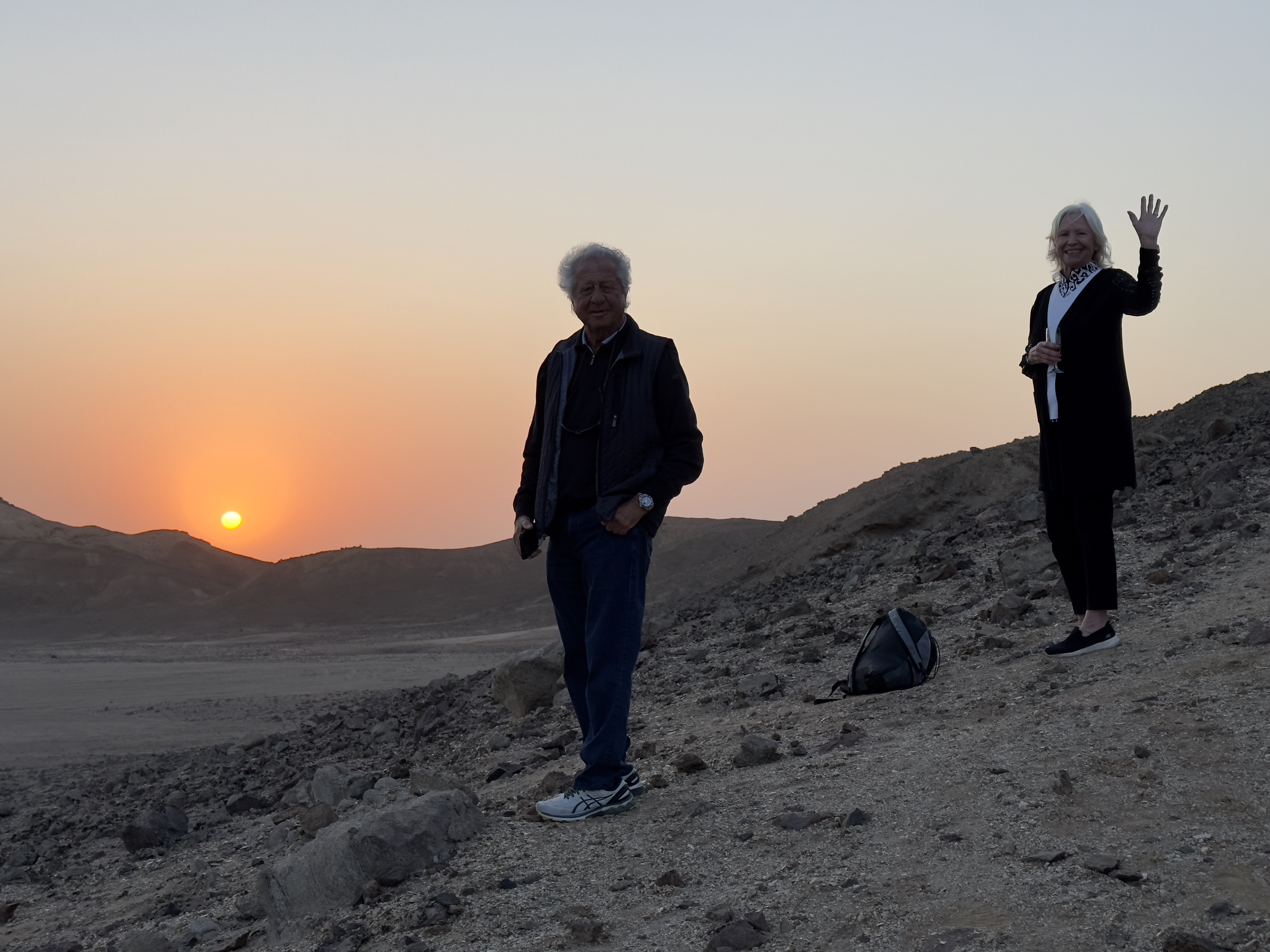


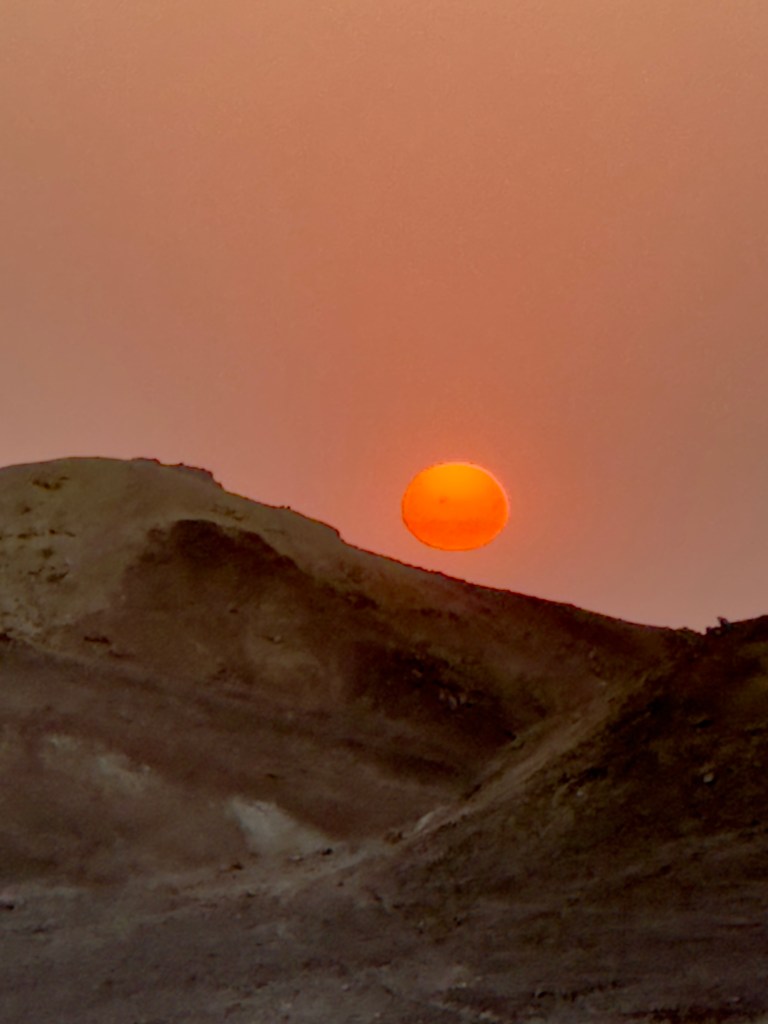
It was time to leave this alien landscape.
Day II in Namibia – Flamingoes, Sand Dunes, Mineral Gallery, and the town of Swakopmund.
By 8:15 AM, we were off the ship. Our first stop, not far away, was to see the Lesser Flamingoes feeding on the mudflats of a low tide.

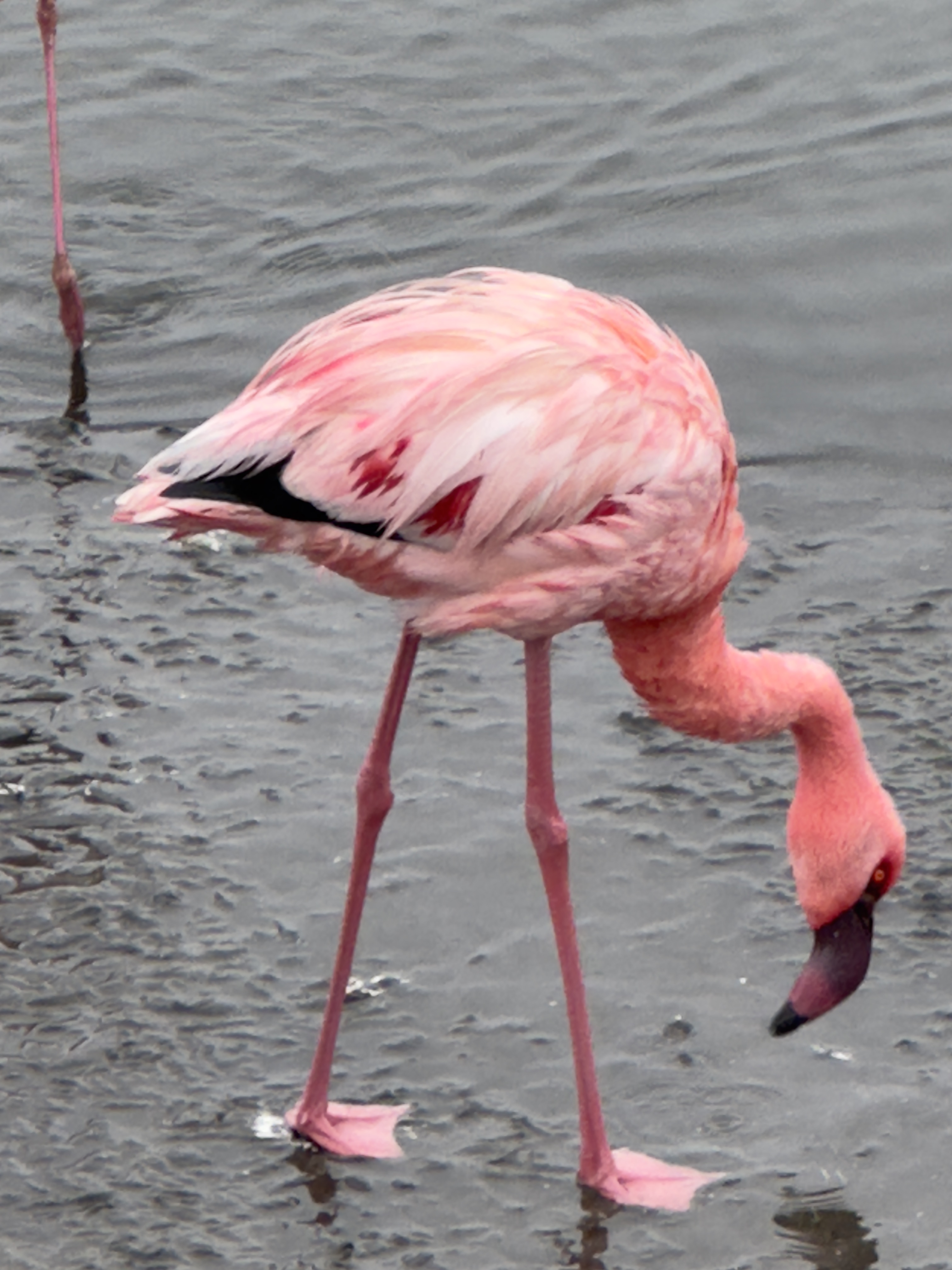

Our guide was insightful, enriching us along the way of Namibia’s culture and gradually altering our view of Namibia––The desert wanting to reclaim everything as it marched towards the sea.

We drove along the highway cutting through the desert sands, heading to the town of Swakopmund. The name comes from the Swakop River (Mouth of The River), but our guide gave us a bit of history of its origin. The original name (Swakop) means intestines, so the original name meant something closer to River Poop, drawing a laugh from us all. The river runs down from the highlands and during the rains the river would gush, carrying dead carcasses and whatever the waters could carry to the Atlantic– Hense River Poop. When the Germans came along, they had no business with that and softened the name of the town, for who was going to visit a town called River Poop?

The town is an anomaly. An oasis in the desert. If someone blindfolded you and brought you in by helicopter you would think you were in some German village along the ocean (sans the sands). All the trees along the coastal region are not native to Namibia but have been brought in over the decades by wealthy businesses.

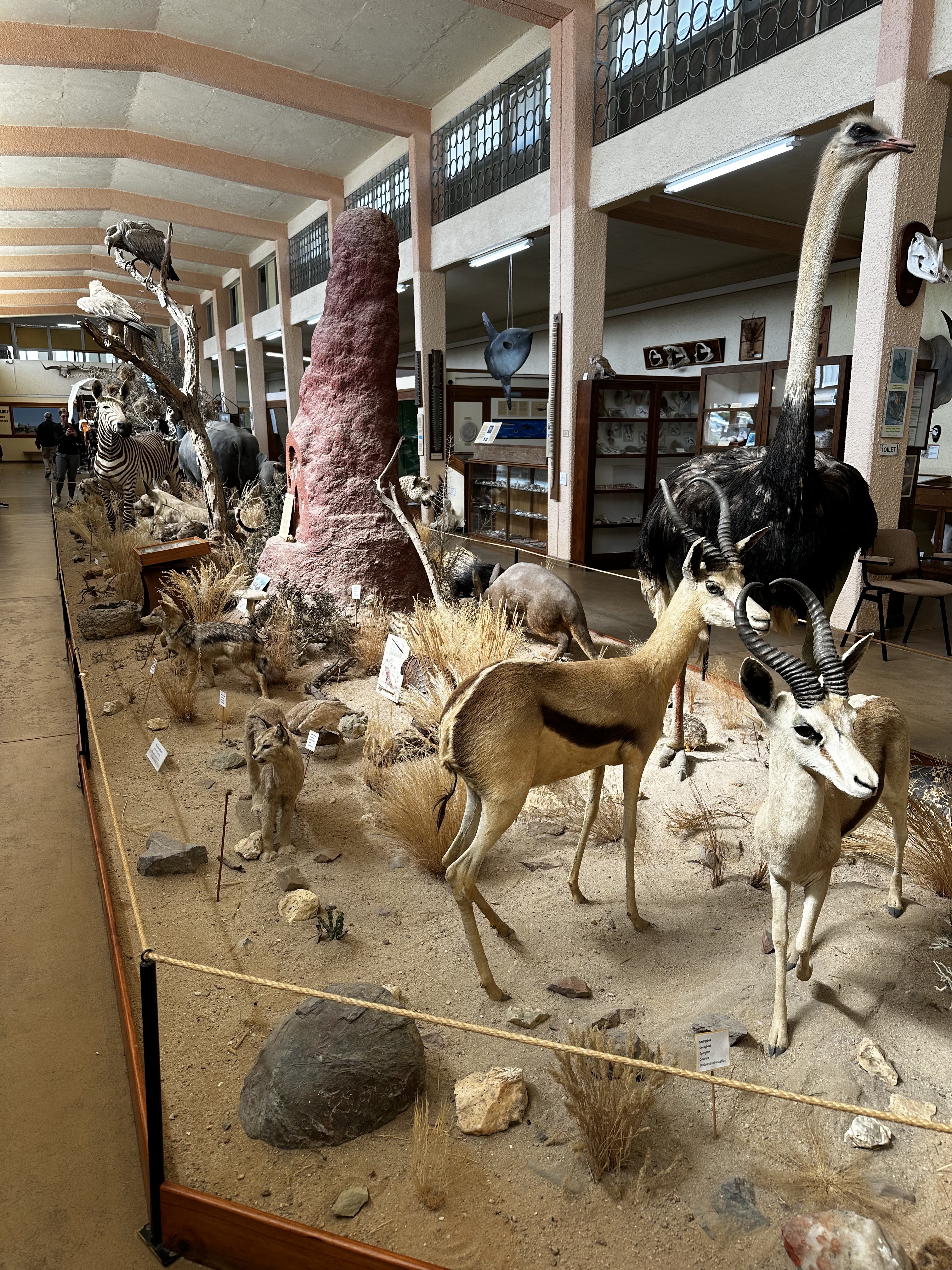
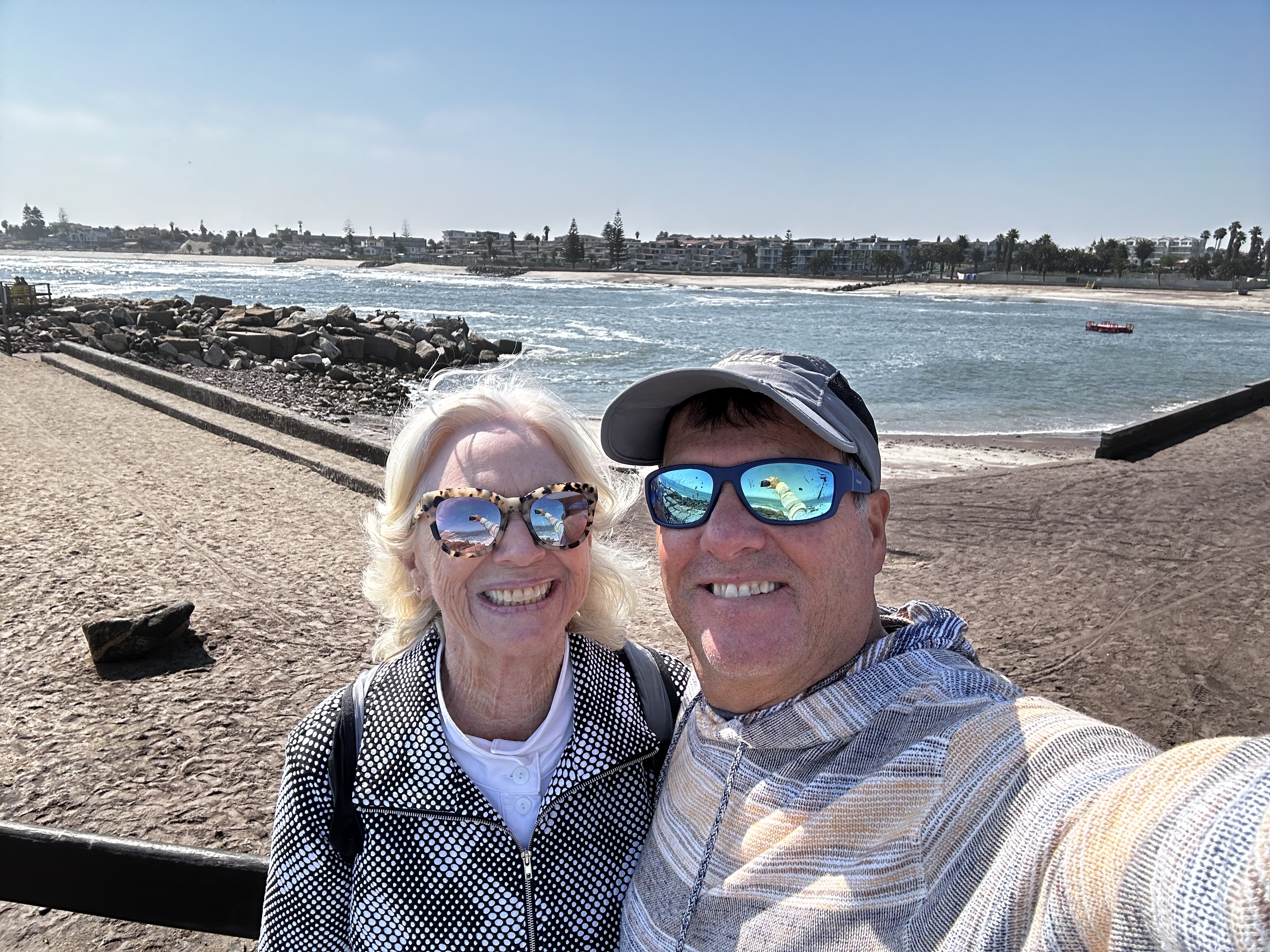
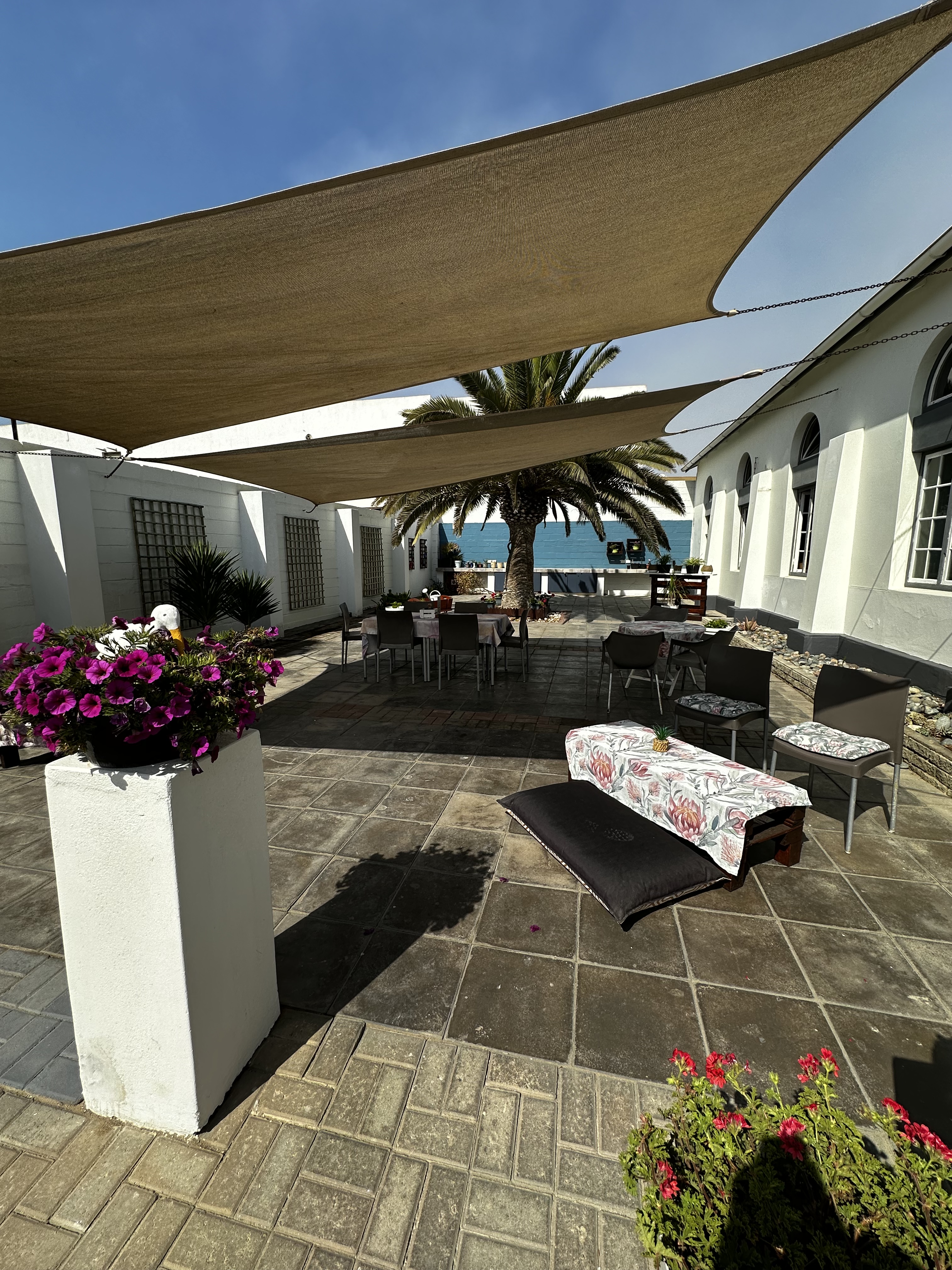
Our first stop was to the Swakop Hotel, an old train station where the tracks once ran where the current pool now sits prominently. We visited a museum, started by a dentist to showcase all he had collected. For such a small museum, it was impressive. We stopped to watch a presentation by students who took a day and collected trash and were given a platform to present whatever they wanted–– to a lot of cheering. We walked the beach and went into town where we followed a sign down an alley, which opened up into this little courtyard where a hand craft store was featuring some of the most beautiful things we have seen on our cruise. We could have purchased everything. EVERYTHING!

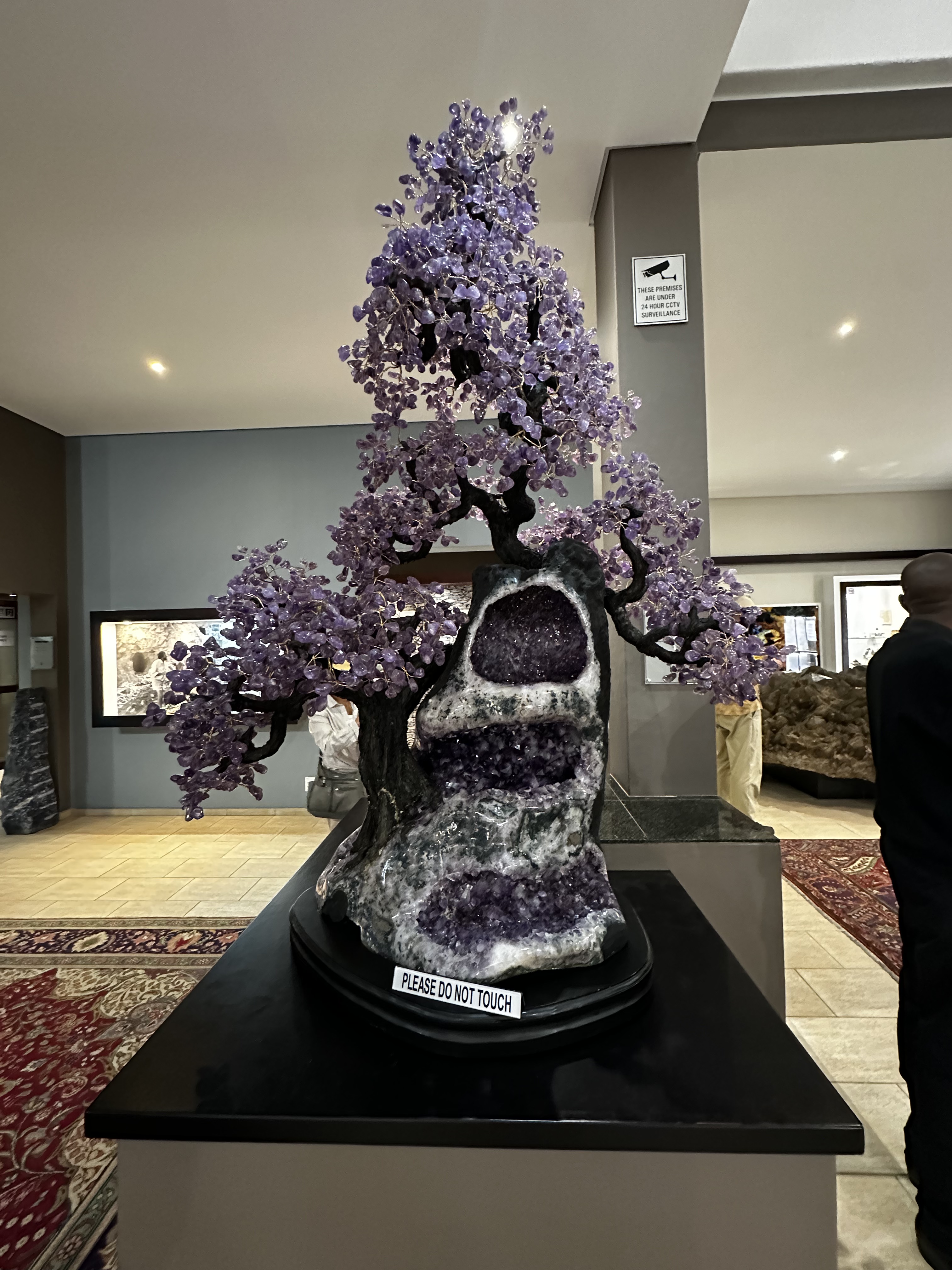
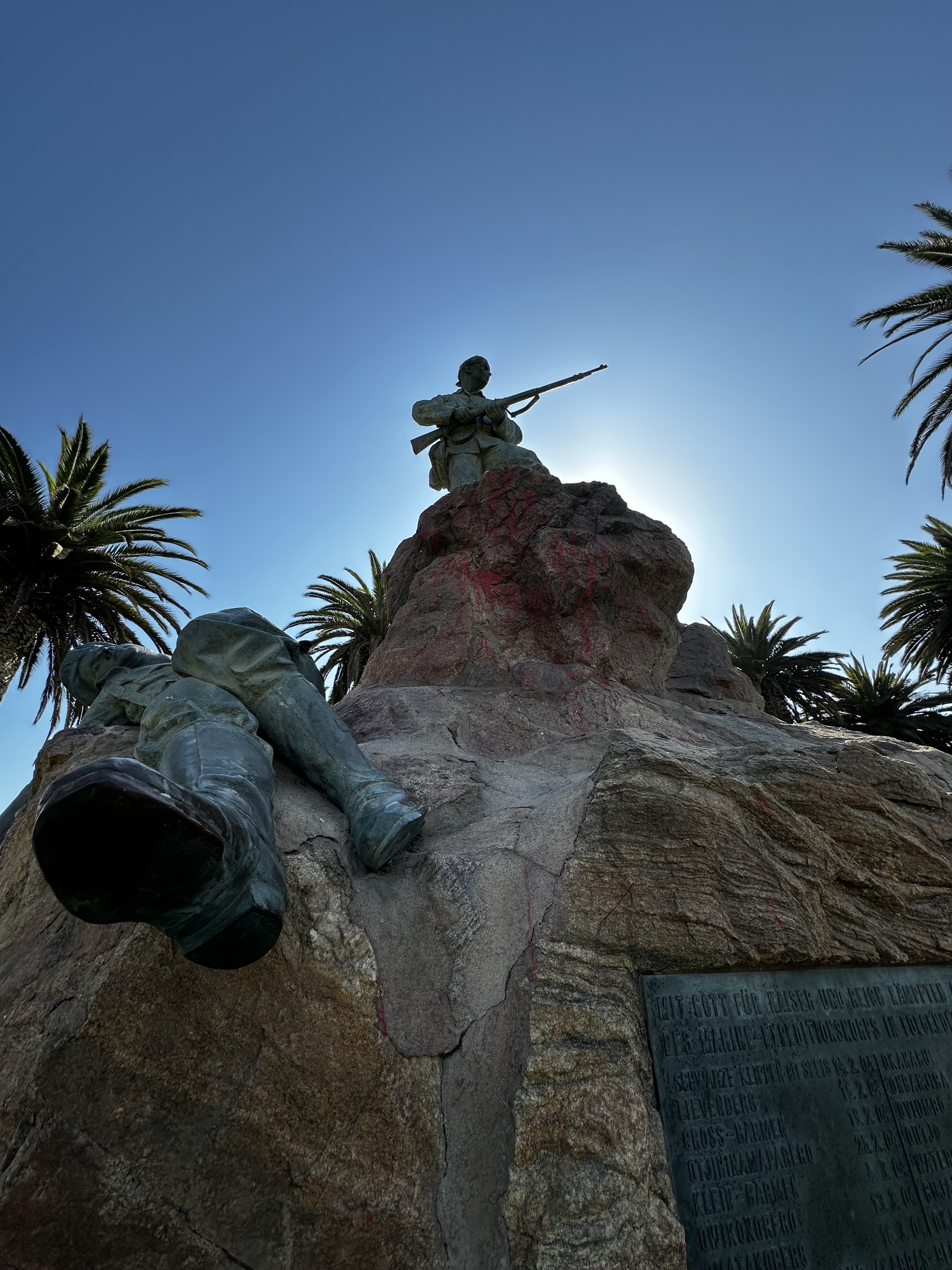
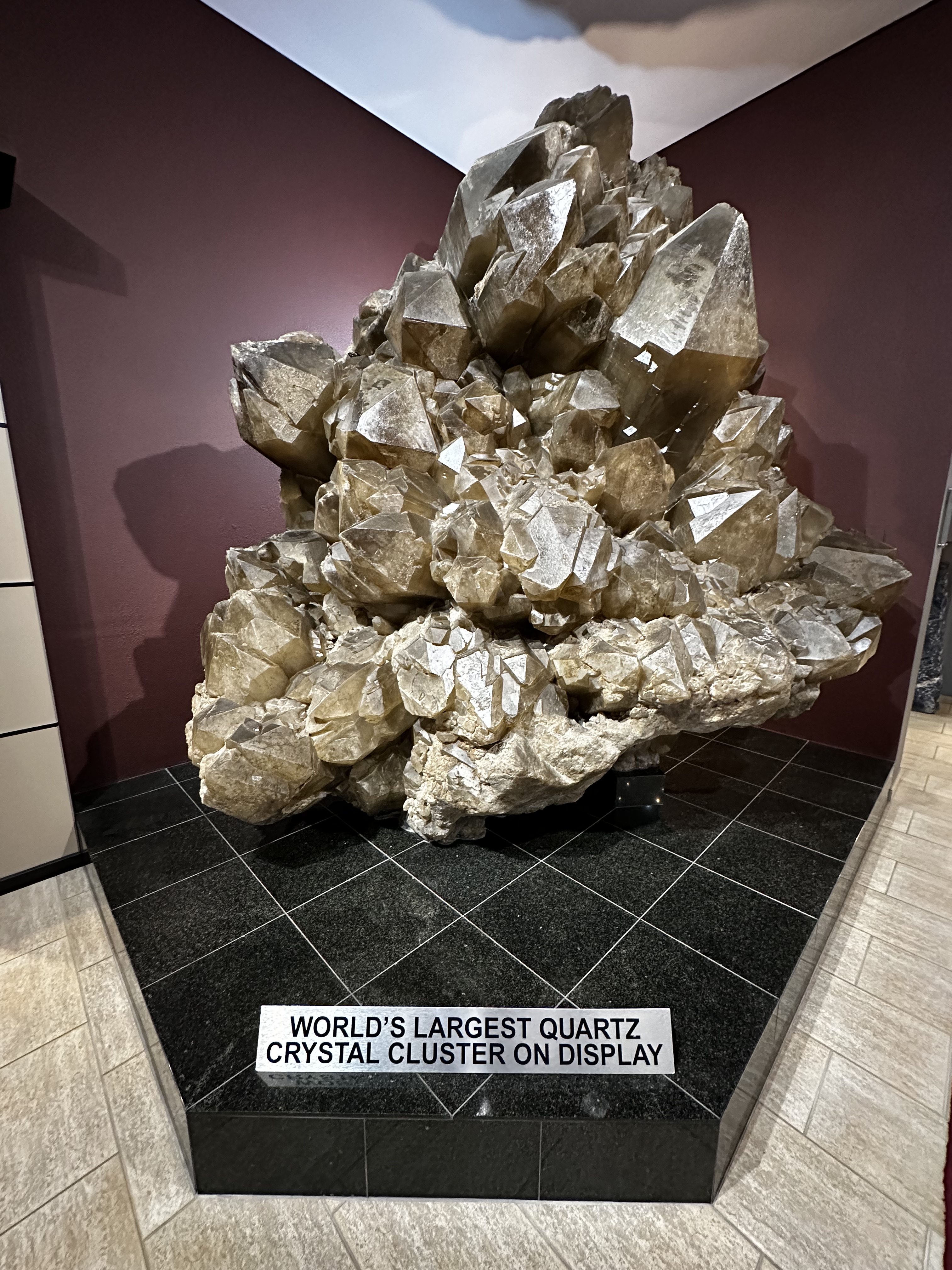




It was time to leave Swakopmund. Along the coast we pulled over to the side of the road to feel the sand.
“Look out at these dunes,” our guide said, “and you see nothing. But trust me, they are full of life; everything is just hiding from the sun.” I began to look at Namibia through his words; the landscape, the people. All this beauty that we first did not see was just hiding from us.
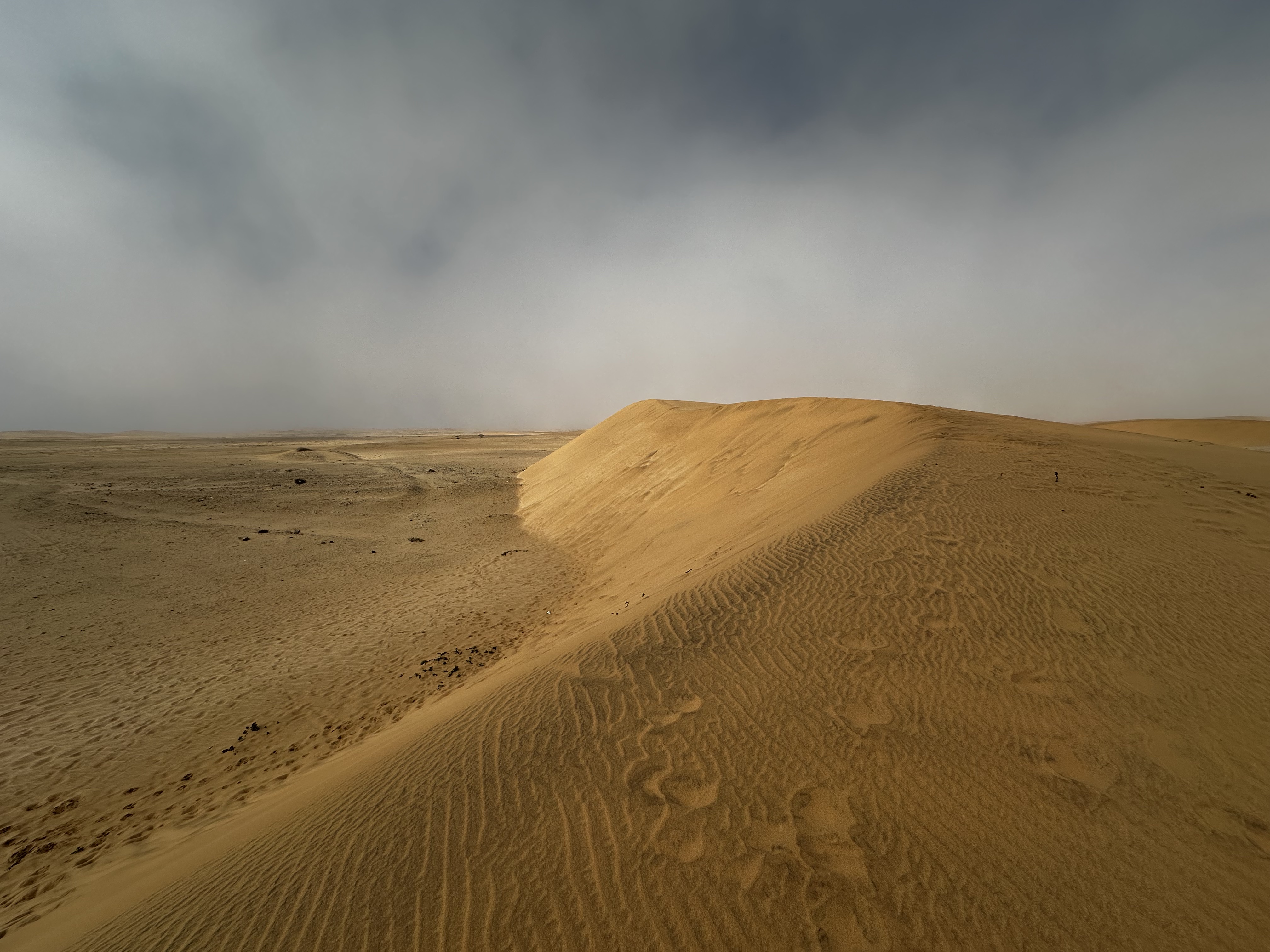
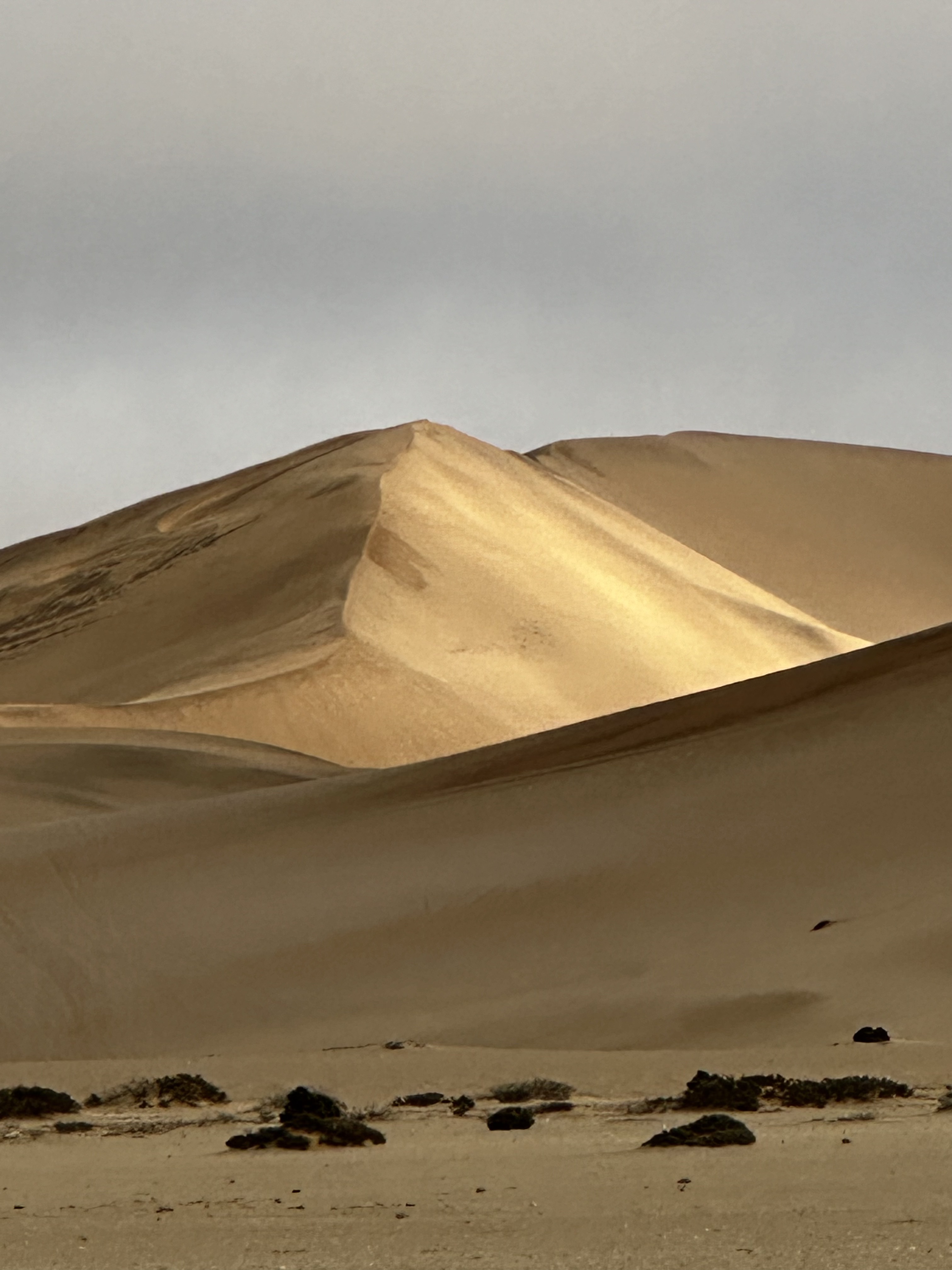

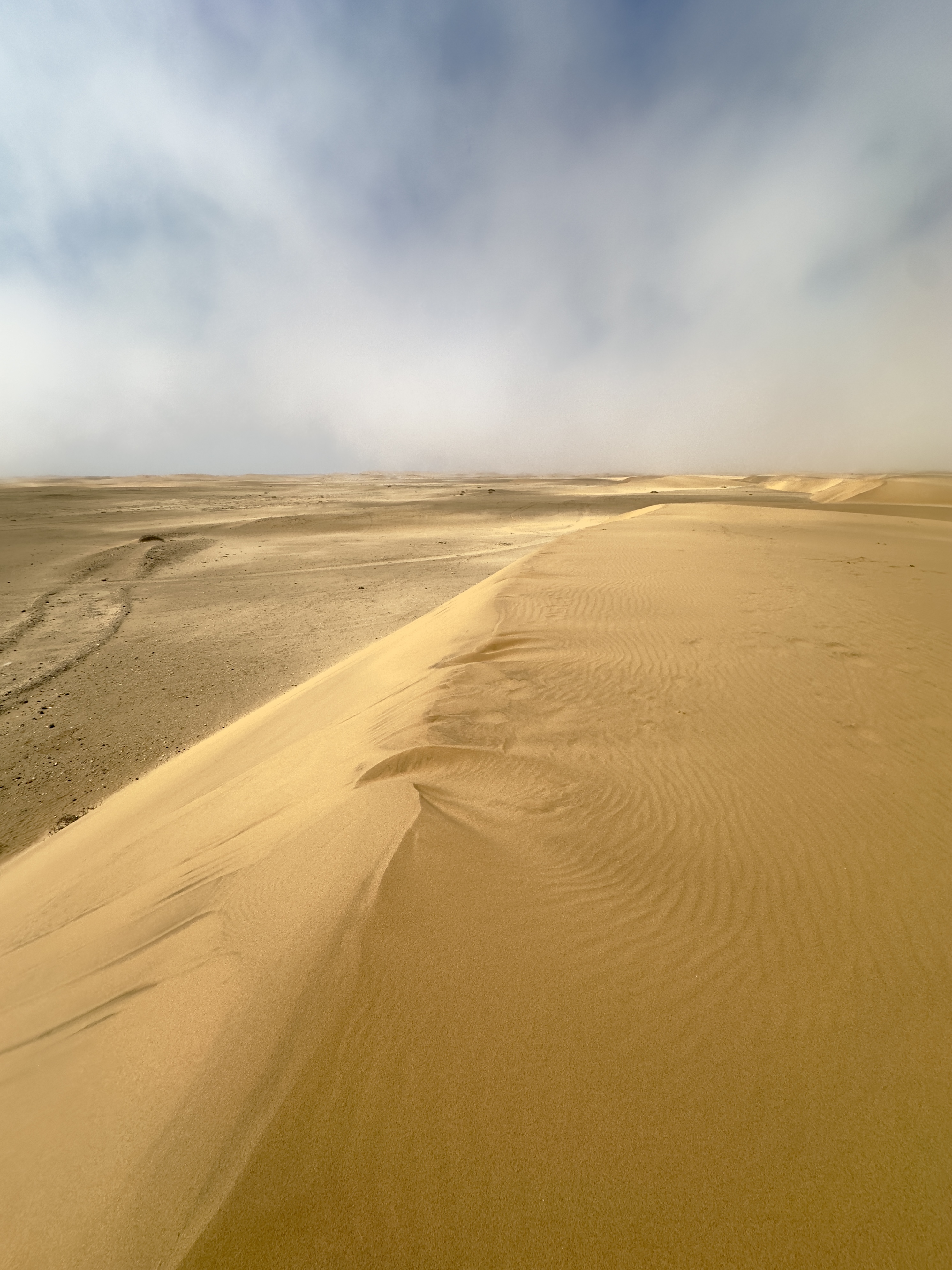
“Hold your iPhone to the sand,” our guide instructed me. I followed his example as he lowered the back of the iPhone to the sand and lifted it, turning it over so I could see tiny silver flecks gathered and neatly arranged. The smartphone’s internal magnets revealed what is hidden in this rich land.
Need I say more……
 2024 World Cruise
Glad you were having such a great time
LikeLiked by 1 person